Intel
Product managed the Intel Inventor Platforms (Curie, Joule, Edison, and Movidius) and built the developer and partner ecosystem around them. Also worked extensively as a technical evangelist, supporting more than 85 hackathons and organizing joint partner enablement programs with Arm, Amazon, Microsoft, and Google to activate industrial developers worldwide.
Numbers
- 80+
- Technical articles produced
- 35+
- Joule platform extensions
- 85+
- Workshops and hackathons runGalileo, Edison and Mashery API
- 10,000+
- Developers reached worldwide
- 50+
- CTOs interviewed for Joule definitionleading IoT startups
- 200+
- Developers through Edison GTM
Problem
Joule, Edison, and Curie shipped before an ecosystem existed around them. No carrier boards to seat them on. No extensions to wire to them. No body of work showing what they were for.
Someone had to be able to go from the box to something running in an afternoon. None of these modules could do that yet.
Solution
I product managed the Inventor Platforms: Curie, Joule, Edison, and Movidius. I built the developer and partner ecosystem around them, and I spent a lot of the job as a technical evangelist.
Before the Joule spec was fixed I interviewed 50+ CTOs at leading IoT startups and ran five internal workshops on the out-of-box experience. The hardware and software decisions followed what those people said.
Then I made the modules reachable. Edison was certified for AWS IoT and for Azure IoT Core, each with its own documentation, developer kits, and sample code. I held the Microsoft IoT relationship through the Joule launch and certified Windows IoT Core for launch day. I organised joint partner enablement with Arm, Amazon, Microsoft, and Google, and with IBM. I wrote 80+ technical articles. Partners I brought in built 35+ Joule platform extensions. I supported 85+ workshops and hackathons across Galileo, Edison, and the Mashery API, and reached more than 10,000 developers. The carrier boards came from outside Intel. The internal roadmap was aimed at production volume.
Analysis
I would start with the interviews again. Product teams heard what was hard about the silicon from the people building on it. That is cheap before a spec freeze. After the freeze, the same findings show up in sales data, and nothing can be changed.
A partner who builds an extension puts their own manufacturing and their own roadmap on your silicon. They do it when the ecosystem case is real. Recruiting them is most of the job.
I certified Edison against both AWS and Azure. A developer cares whether the module works with the cloud their company already pays for.
Result
80+ technical articles. 35+ Joule platform extensions. 85+ workshops and hackathons. More than 10,000 developers reached worldwide. 200+ developers through the Edison go-to-market. Dozens of design wins from the customer research, back into product, engineering, sales, and marketing.
On Edison I worked with the OpenAPS team and organised the Explorer Board build team. OpenAPS is an open-source artificial pancreas. Thousands of people use it to manage their blood sugar.
What I built
AWS IoT and Azure IoT Core certification2015
Led the teams that certified Edison against both major IoT clouds, each with its own documentation, developer kits and sample code. I then ran the AWS IoT launch-day workshop at Amazon re:Invent for 90+ developers on Intel's behalf.
Joule product definition2016
Interviewed 50+ CTOs at leading IoT startups and ran five internal workshops on the out-of-box experience, feeding both into the hardware and software decisions before the spec was fixed.
The Intel and Microsoft IoT relationship2016
Acted as Intel's lead on the Microsoft IoT relationship through the Joule launch, and certified the module's launch-day compatibility with Windows IoT Core.
Intel Joule robotics platform with Portland State University2016
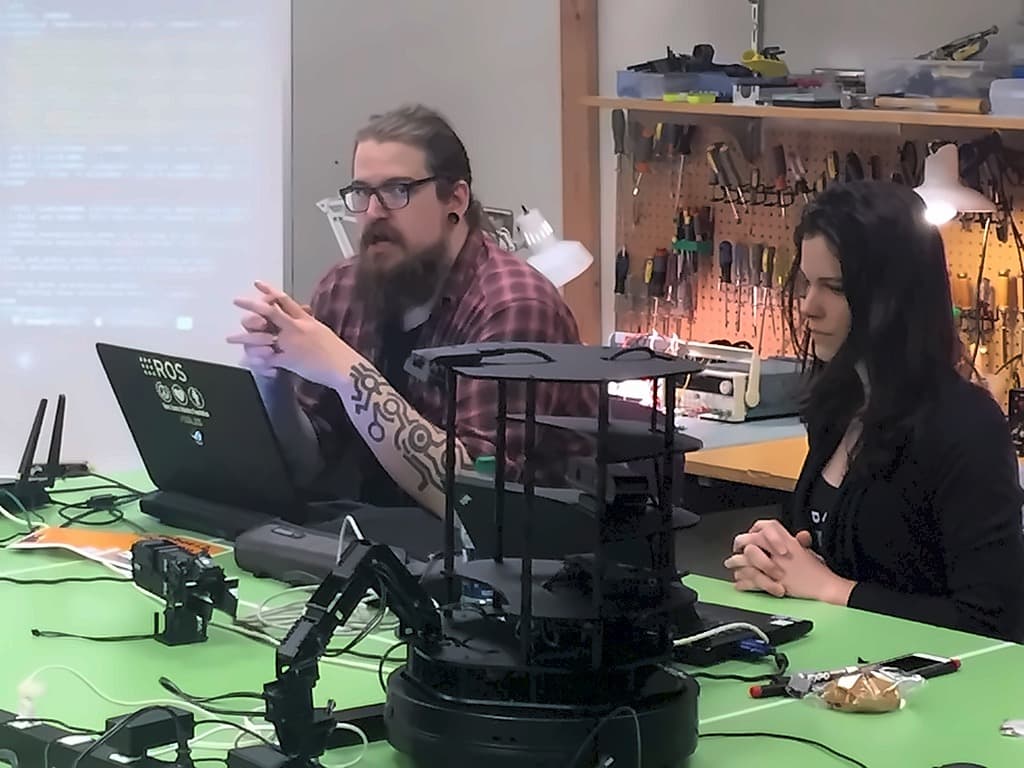
I collaborated with Portland State University professors on an end-to-end robotics platform. Sensing, manipulation, and transportation, with Intel RealSense and Intel Joule, running ROS.
Carrier board rollout2016
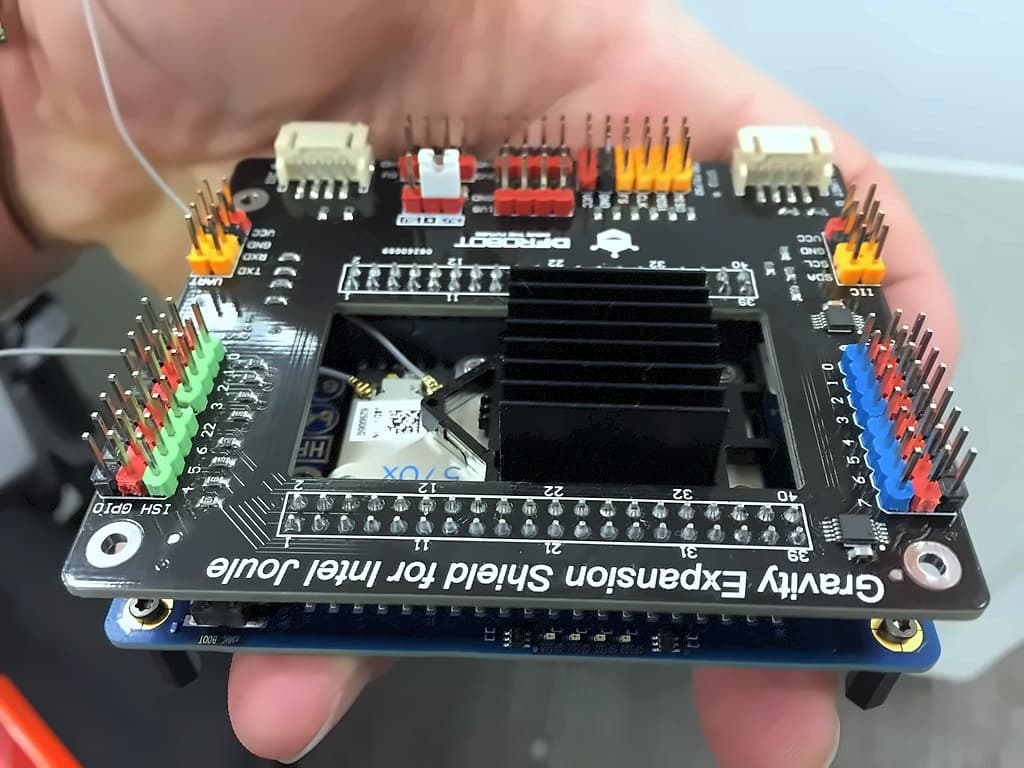
Worked with external hardware vendors to produce the prototyping carrier boards the Joule ecosystem needed, when the internal roadmap was aimed at production boards instead.
Partner curation and platform extensions
Recruited and managed the long list of hardware and software partners building extensions on top of the platforms, and ran the technical customer interviews that fed back into product.
Figures
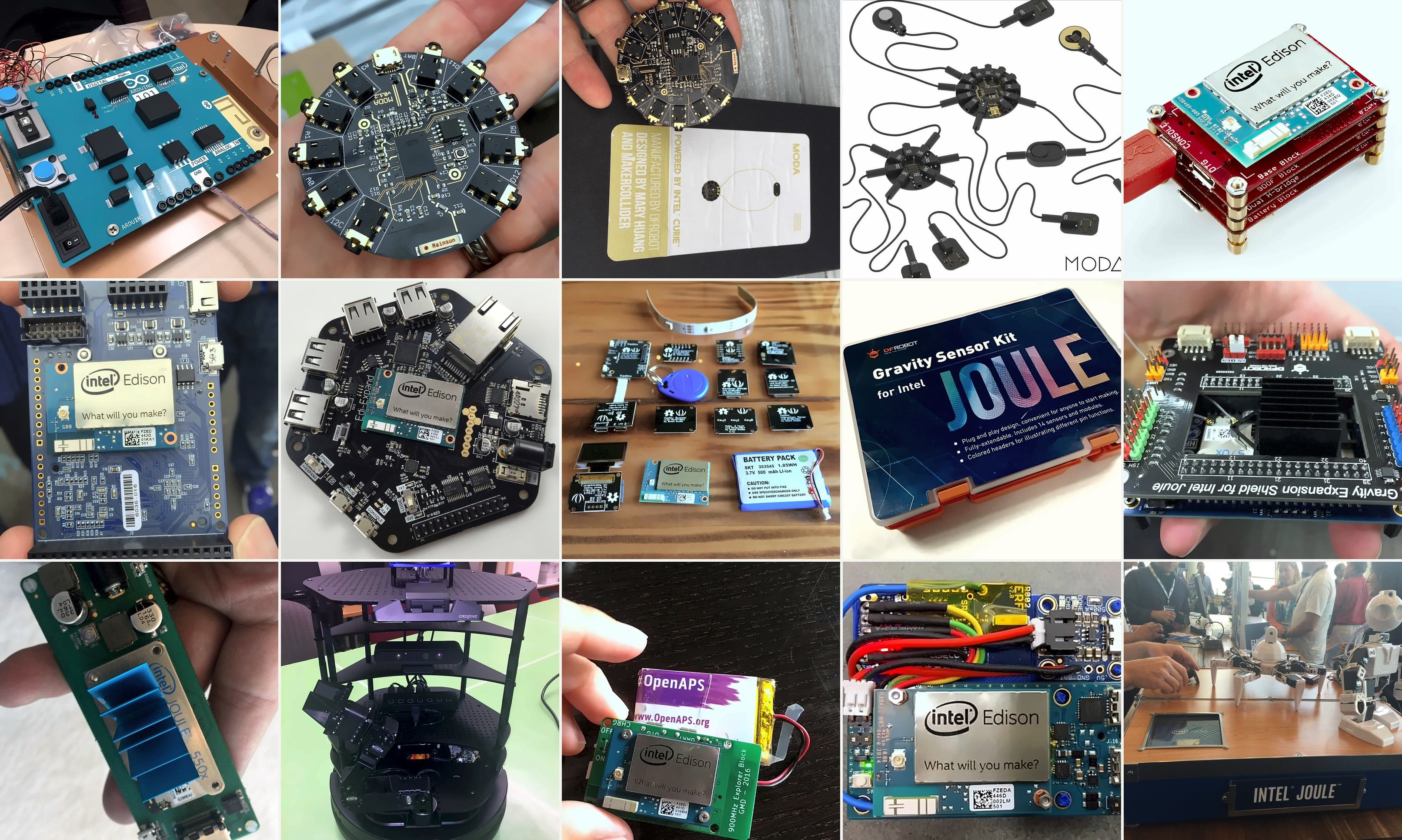
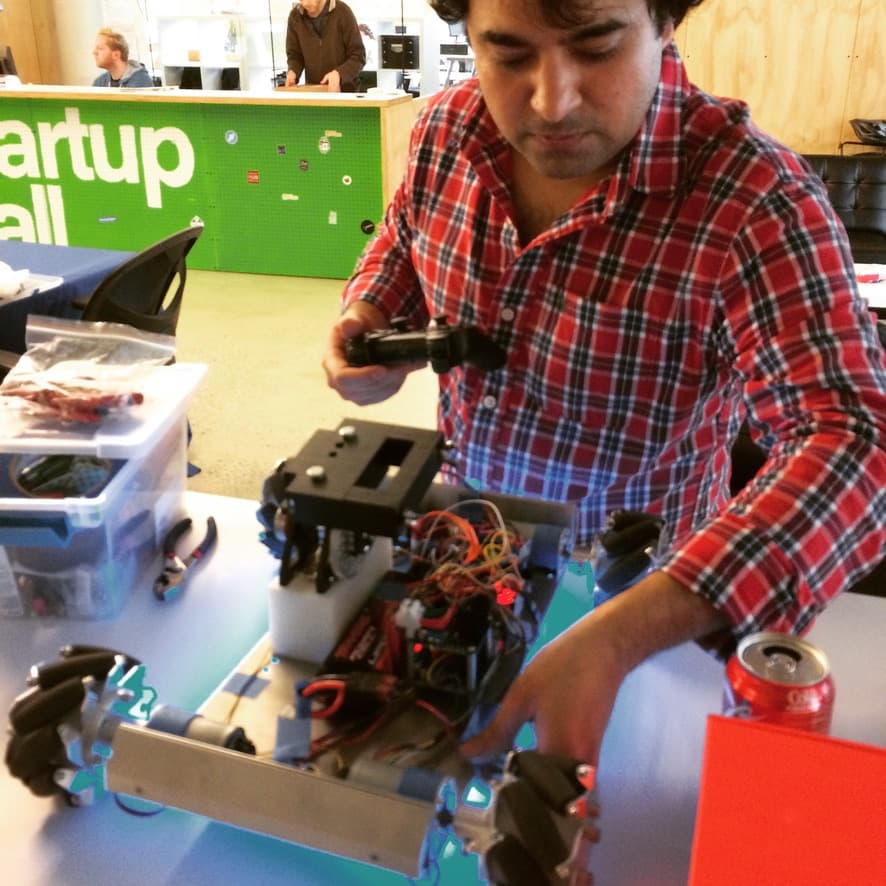
The ecosystem in one frame. Partners and developers built almost all of it, once the modules had somewhere to plug in. 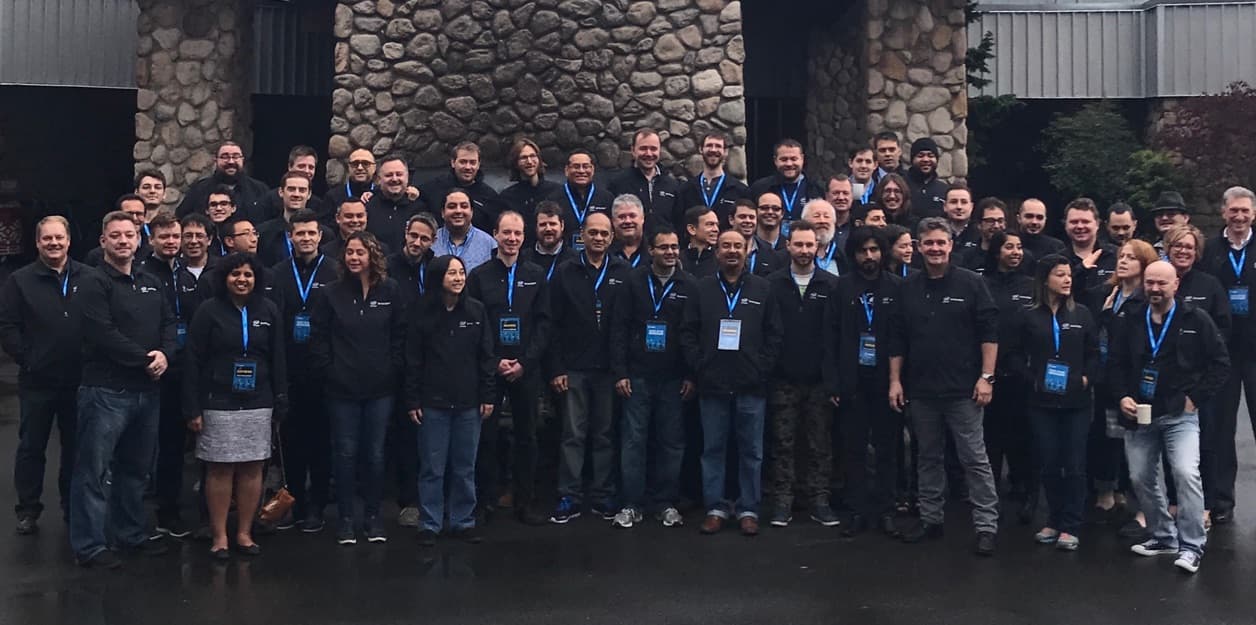
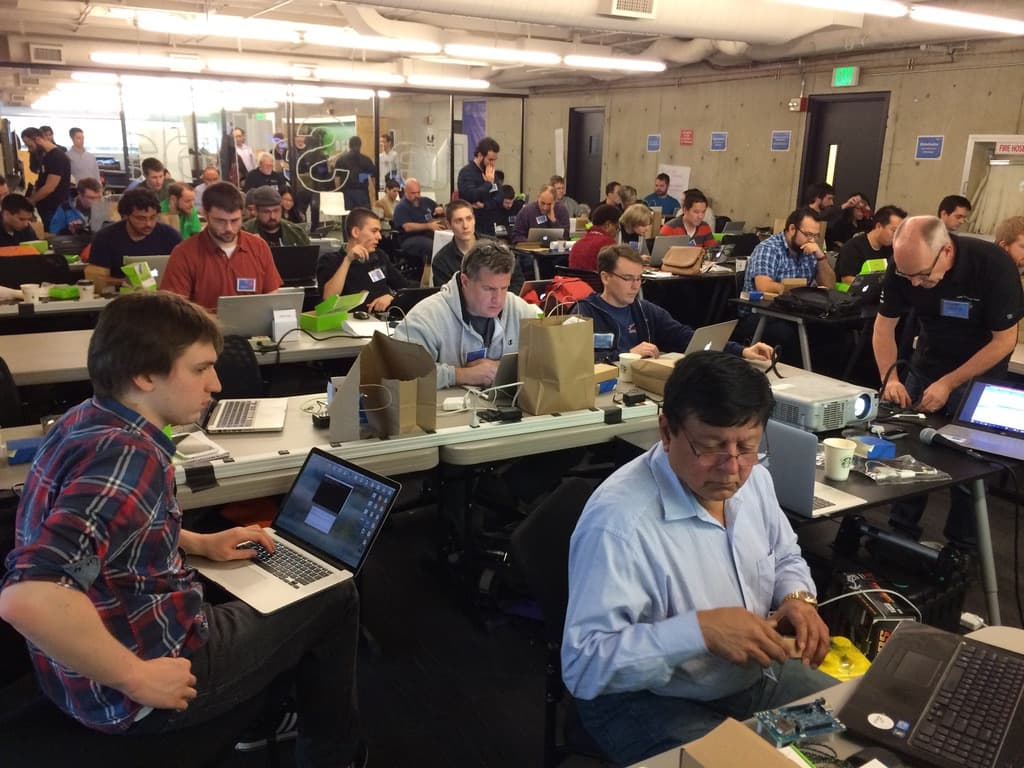
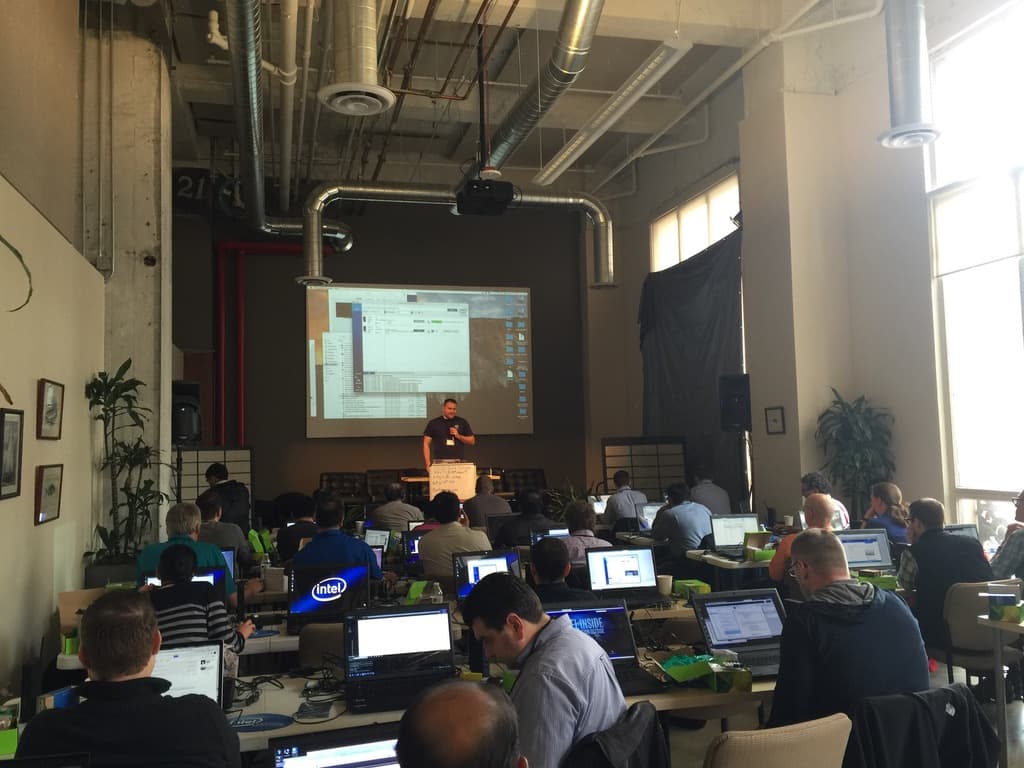
One of 85+ workshops. The green boxes are dev kits and every laptop is mid-build. I counted these by how many people left with something running. 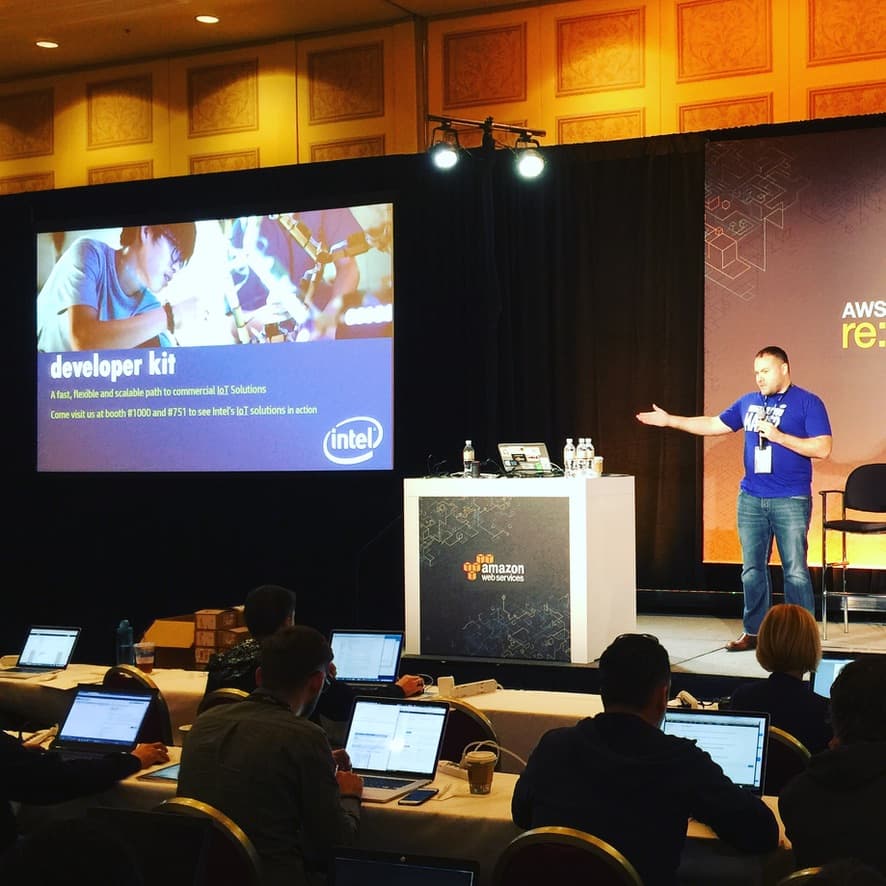
The AWS IoT launch-day workshop at re:Invent, 90+ developers, run on behalf of Intel. 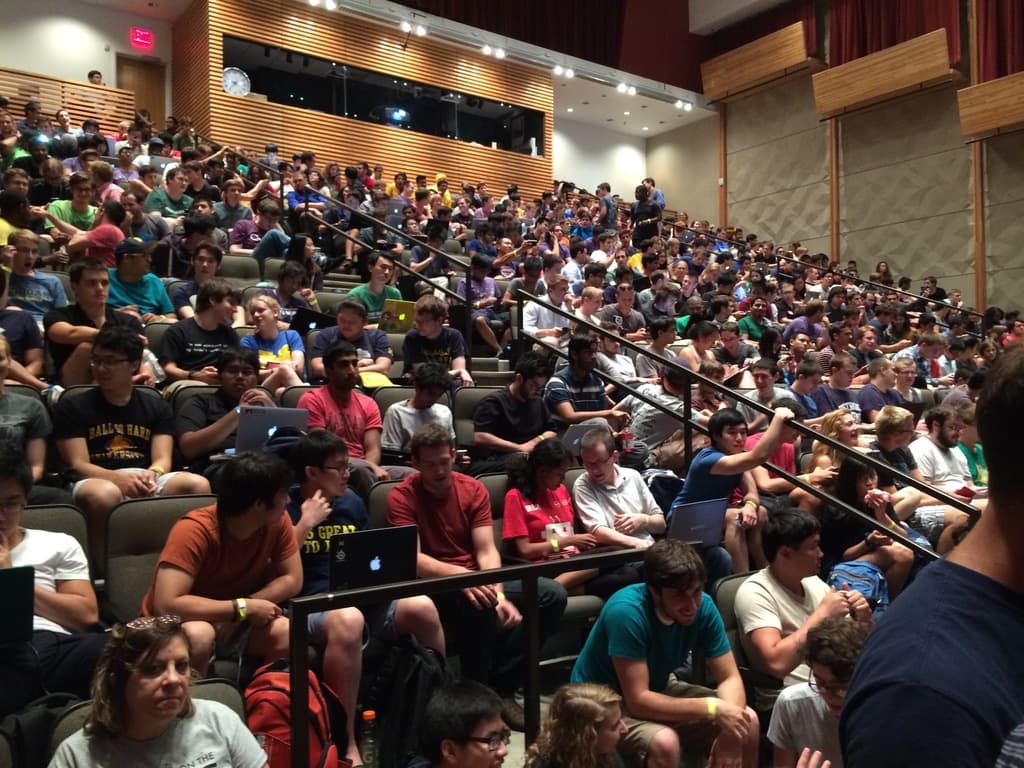
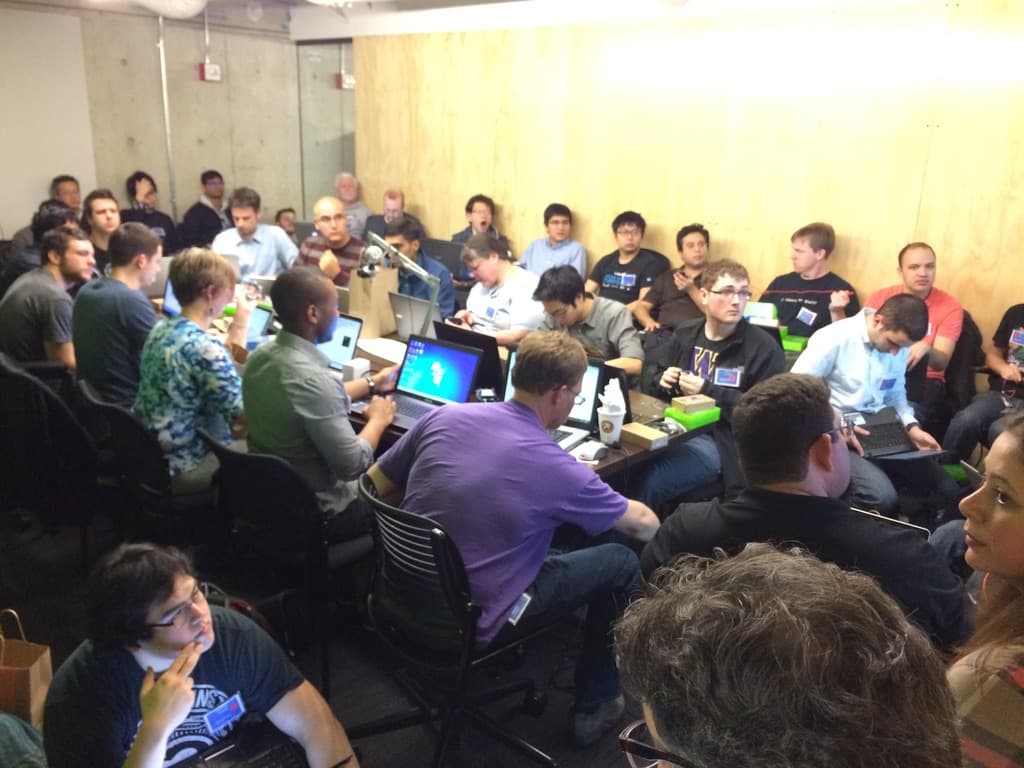
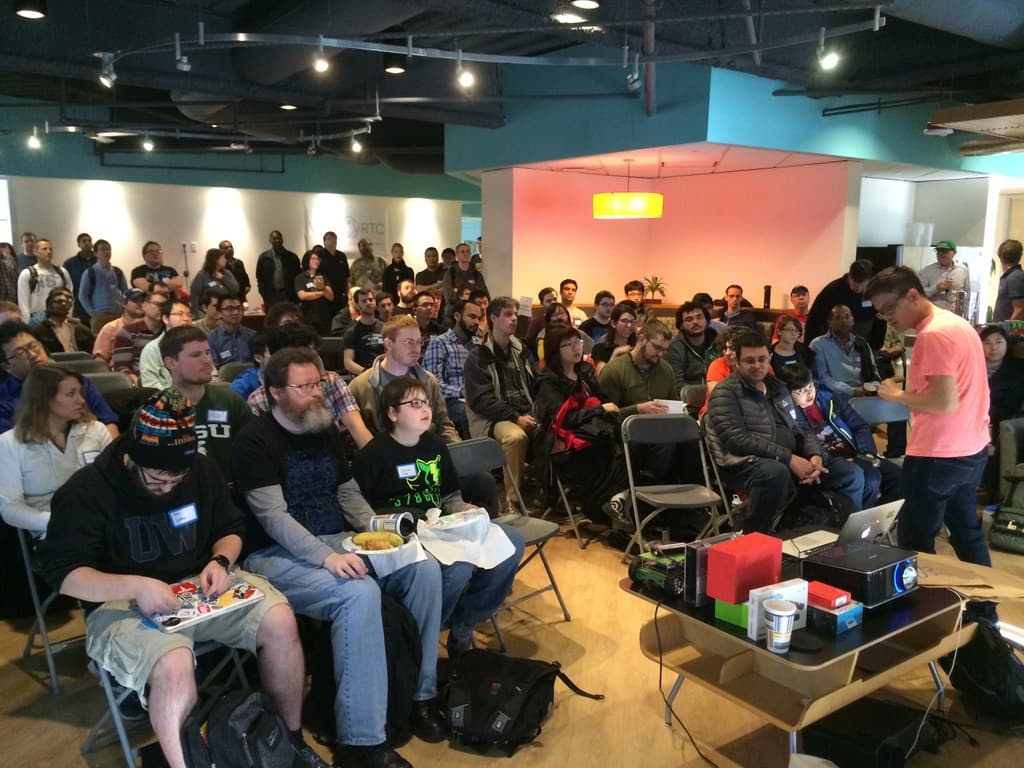
A hackathon hall, filled to the back row. 10,000+ developers reached in person looks like this, sixty-odd times over. 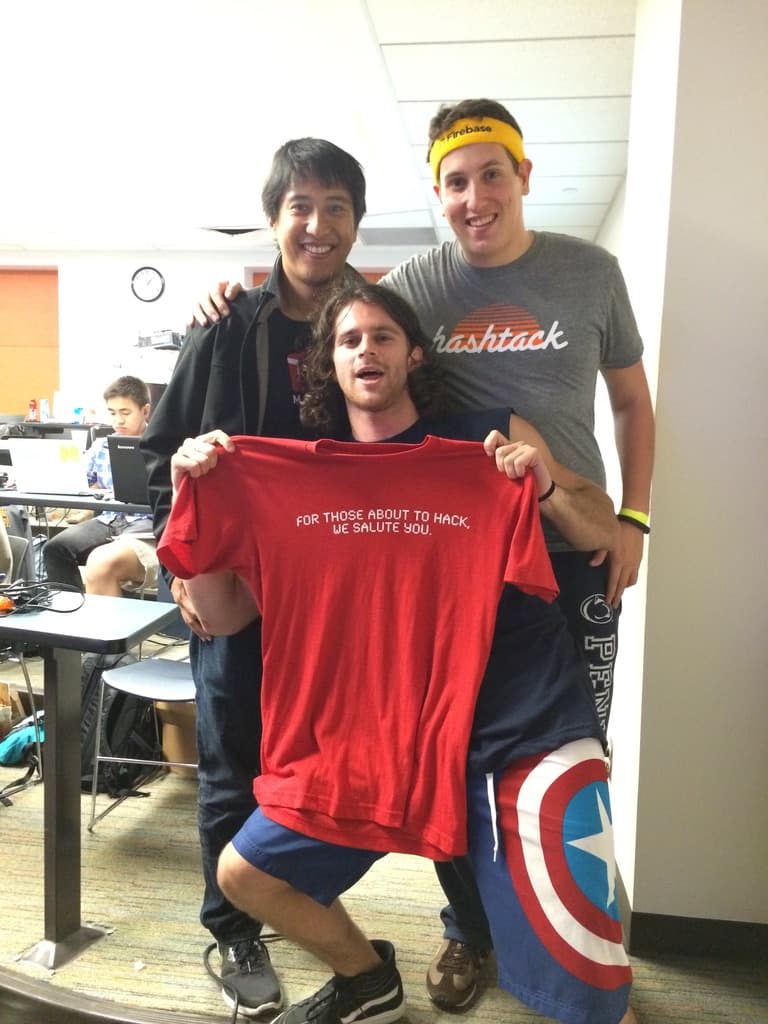
Three participants and the shirt they went home with. The other half of the job.
Activations
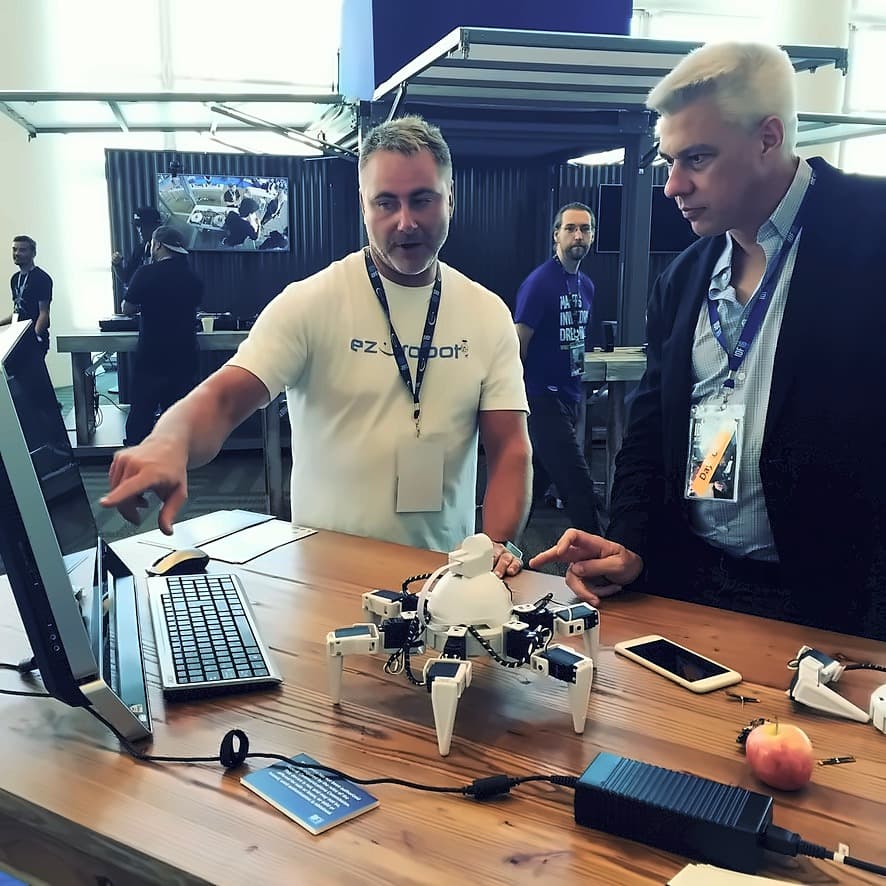
Platforms
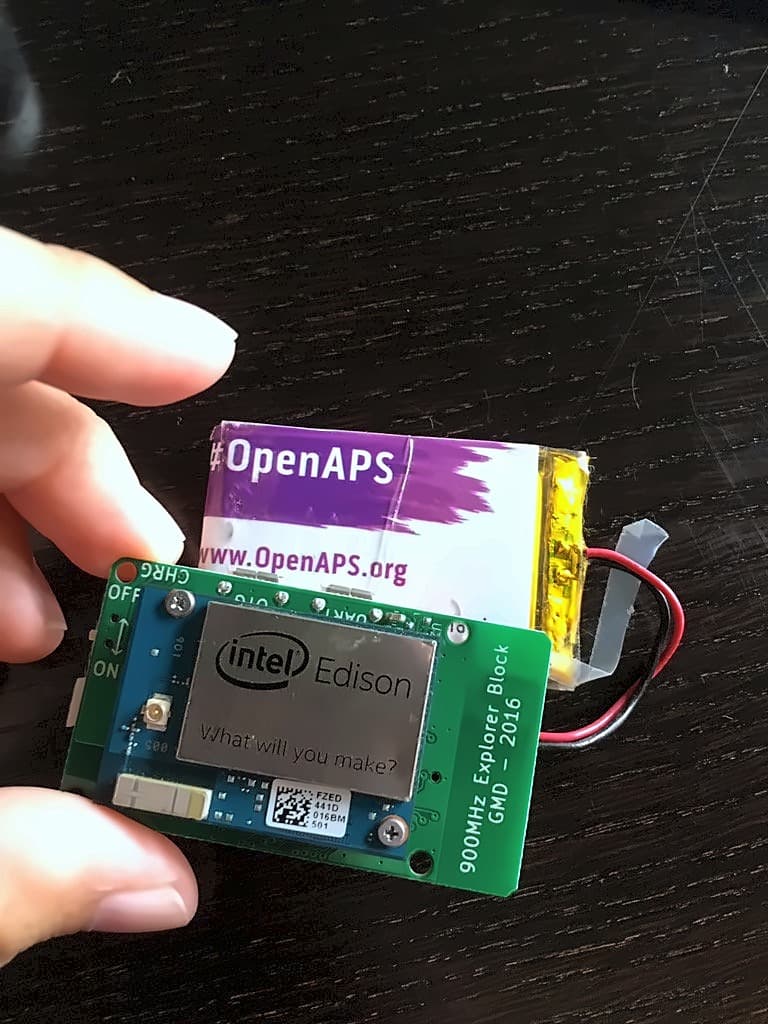
OpenAPS on Intel Edison
I worked with the OpenAPS team to design a custom Explorer Board that made the OpenAPS platform accessible to thousands of people around the world. OpenAPS is an open-source artificial pancreas system used by thousands to manage their blood sugar.
Joule robotics platform with Portland State University
I collaborated with Portland State University professors to design an end-to-end robotics platform, combining sensing, manipulation, transportation, Intel RealSense, and Intel Joule into a single integrated platform capable of running ROS.
Intel Joule
In Intel's New Technology Group, I helped enable more than 30 carrier boards and platform extensions, plus developer kits, so developers could get up and running with Joule quickly and build solutions within days.
50+ CTOs interviewed for product definition120+ Developers worked with through launch15 Platforms at launch
Intel Curie
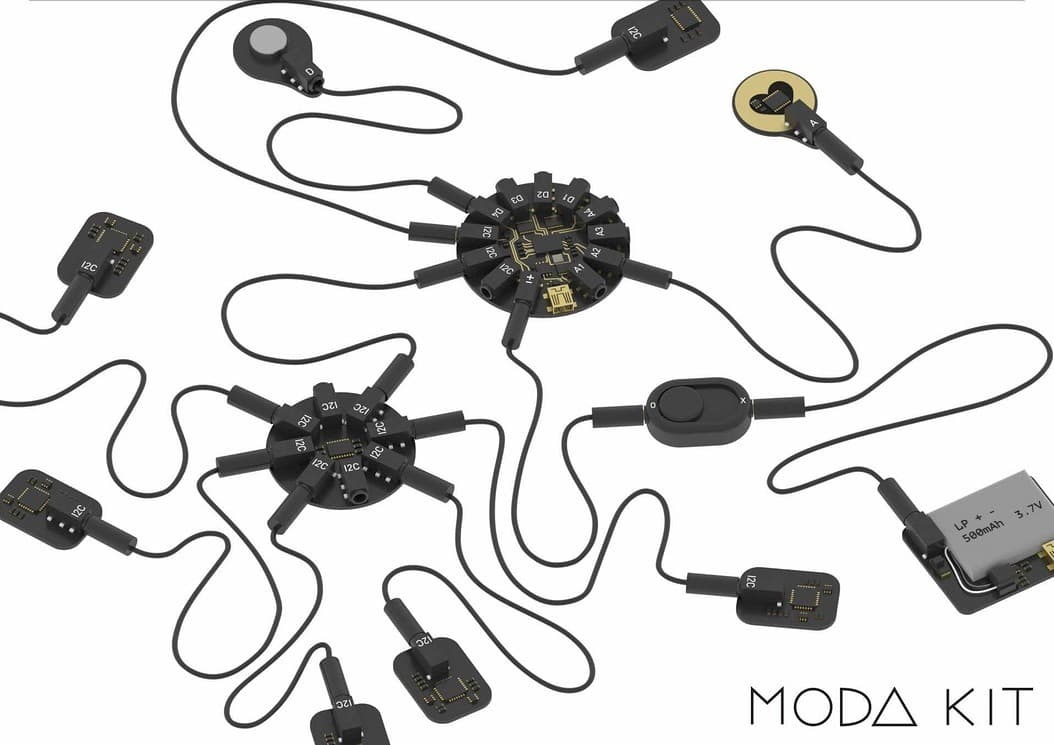
Also in Intel's New Technology Group, I worked with creative developers and makers building platform extensions, developer kits, and projects on Intel Curie, an embedded microcontroller with a neuromorphic pattern-matching engine capable of early AI at the edge.
Intel Edison
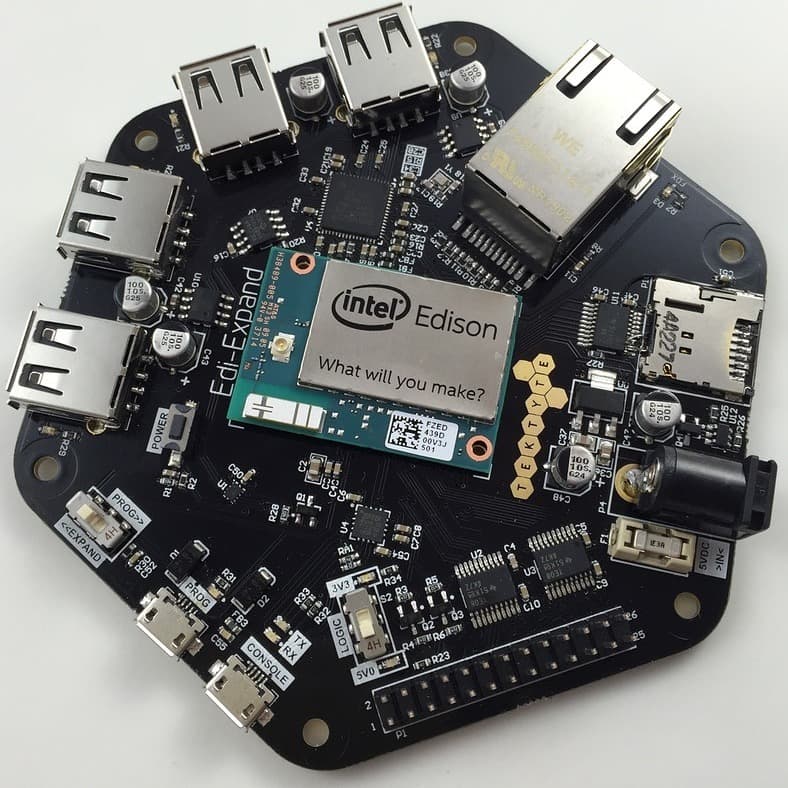
Across Intel's developer relations division and New Technology Group, I supported more than 85 hackathons and ran dozens of workshops that taught tens of thousands of developers to use Intel Edison. I also led the Edison hardware ecosystem, helping hundreds of developers build and ship products on it.
200+ Developers worked with on Edison GTM2 Clouds certified90+ Developers at the re:Invent launch workshop