Intel Joule
In Intel's New Technology Group, I helped enable more than 30 carrier boards and platform extensions, plus developer kits, so developers could get up and running with Joule quickly and build solutions within days.
Numbers
- 50+
- CTOs interviewed for product definitionleading IoT startups, before the spec was fixed
- 120+
- Developers worked with through launchrobotics, camera, drone, IoT and edge computing
- 15
- Platforms at launchshipped alongside the module rather than after it
- 35+
- Platform extensions producedacross the life of the platform, not only at launch
Problem
Joule was Intel's highest-performance maker module, aimed at robotics, drones, and machine vision. It shipped as a pinout, a heatsink, and a price. Those people need a board to seat it on, a way to wire sensors, and proof that someone has already made it work. Intel's own board roadmap was aimed at production volume. That sells silicon. It does not help someone deciding over a weekend.
The spec was being set before anyone had asked the people who would buy it.
Solution
In Intel's New Technology Group I worked the module from definition through launch.
Before the spec froze I interviewed 50+ CTOs at leading IoT startups and ran five internal workshops on the out-of-box experience. Both fed the hardware and software decisions while they could still change.
Then go-to-market with 120+ developers in robotics, camera, drones, IoT, and edge computing, through the launch at Intel IDF 2016. Fifteen platforms were ready that day. Expansion shields, sensor kits, carrier boards, and robotics platforms, each from a partner recruited and supported onto their own hardware schedule. Windows IoT Core was certified for launch day through the Microsoft IoT relationship I held.
Developer kits and prototyping carrier boards came from outside. The internal roadmap was not going to produce the boards people prototype on. More than 30 carrier boards and platform extensions, plus those kits, are what let someone get Joule running and build on it within days.
Analysis
A board to plug the module into has to exist on announcement day. The developer who finds nothing to buy does not come back in six months.
That meant scheduling other companies' manufacturing against a date I did not control. I committed partners early, on a module most of them had not seen working.
Fifty external CTOs in a product definition slows the spec down. Skip that step and the same findings arrive as sales data, a year after tape-out.
Result
DFRobot's Gravity shield colour-codes its headers, so you can wire a sensor without opening a pinout. Their sensor kit puts fourteen modules in a case.
Both were on sale when the module was. Across the life of the platform the extension count reached 35+, against the 15 ready on day one.
Photos
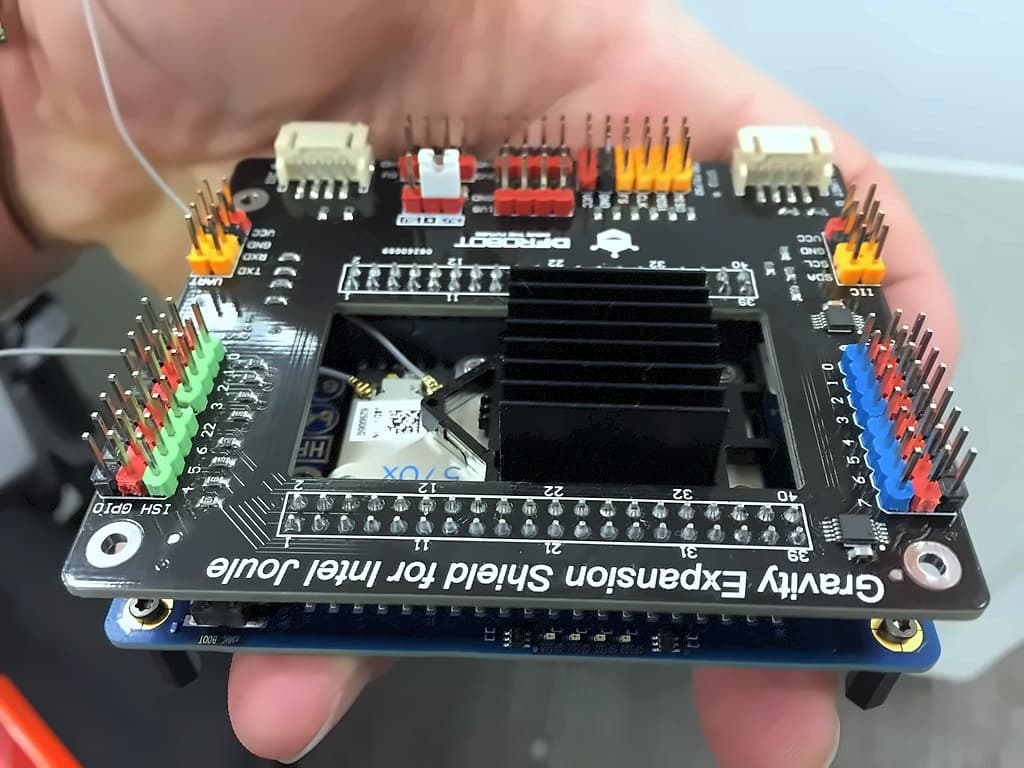
DFRobot's expansion shield. The coloured headers are the documentation — you can wire a sensor without opening a pinout. 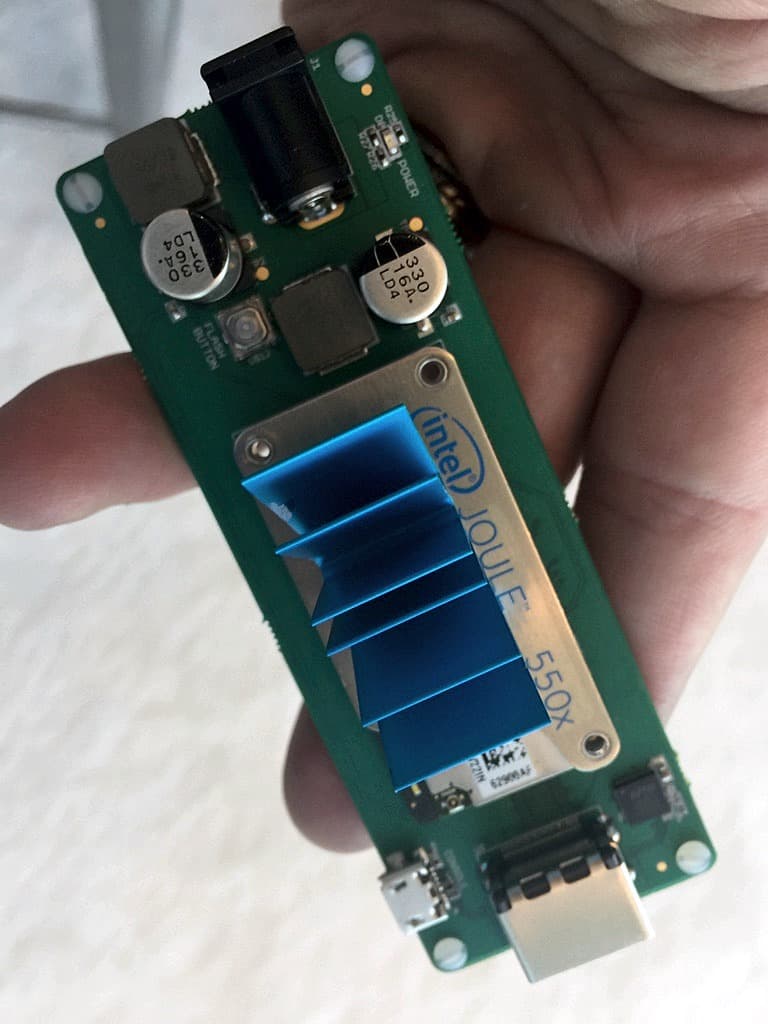
The Joule 550x. Most of what you can see is heatsink. 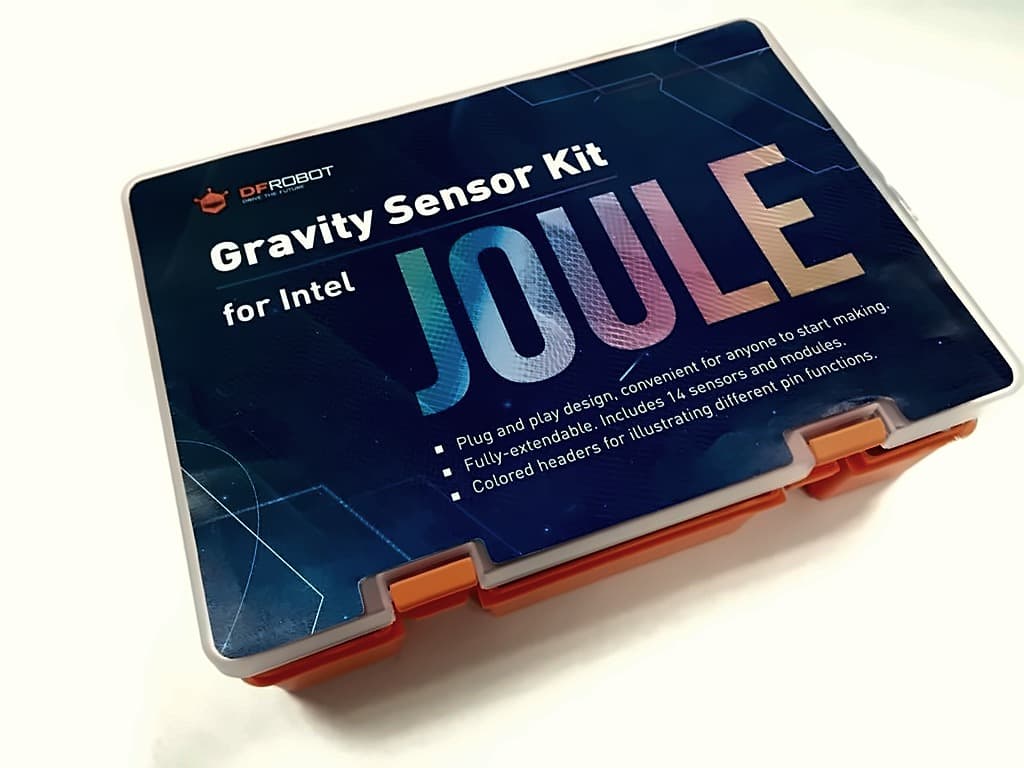
Fourteen sensors in a box. A partner productising the gap between a module and a project. 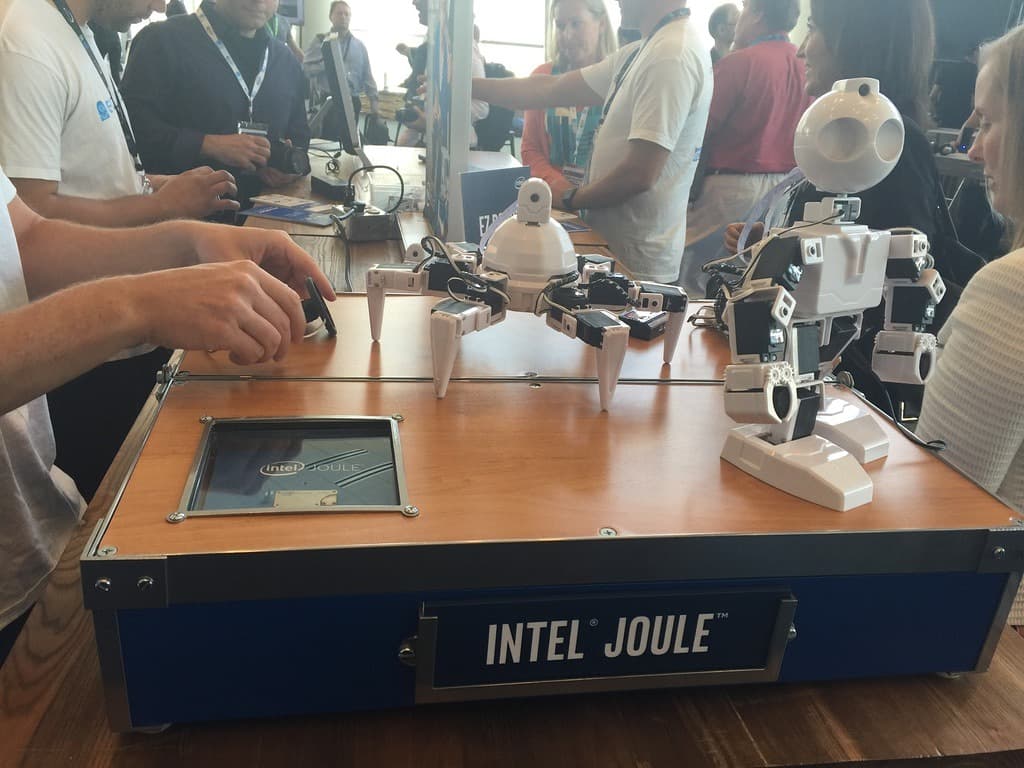
Launch day. The module under glass is what Intel sold; the robots are why anyone stopped walking.