Intel Curie
Also in Intel's New Technology Group, I worked with creative developers and makers building platform extensions, developer kits, and projects on Intel Curie, an embedded microcontroller with a neuromorphic pattern-matching engine capable of early AI at the edge.
Problem
Curie is a button-sized module with onboard motion sensing, small enough and low-power enough to go inside something worn. That pulled in wearables designers. The hardware around the module assumed an embedded engineer.
Solution
In Intel's New Technology Group I worked with creative developers and makers on platform extensions, developer kits, and projects. Curie is an embedded microcontroller with a neuromorphic pattern-matching engine, early AI at the edge.
Two routes in. MODA, designed by Mary Huang with MakerCollider and manufactured by DFRobot, for the designer. Arduino 101, which put Curie in front of anyone who had used an Arduino. That is a much larger group than the people shipping a wearable.
Analysis
MODA uses soft cabling, petal connectors around a hub, and a silkscreen label on every port. Someone sewing a garment can assemble it without a datasheet on a second monitor.
Both routes came from outside Intel. Mary Huang, MakerCollider, and DFRobot on MODA. Arduino on the other. The interesting hardware around Curie came from designers and makers.
Photos
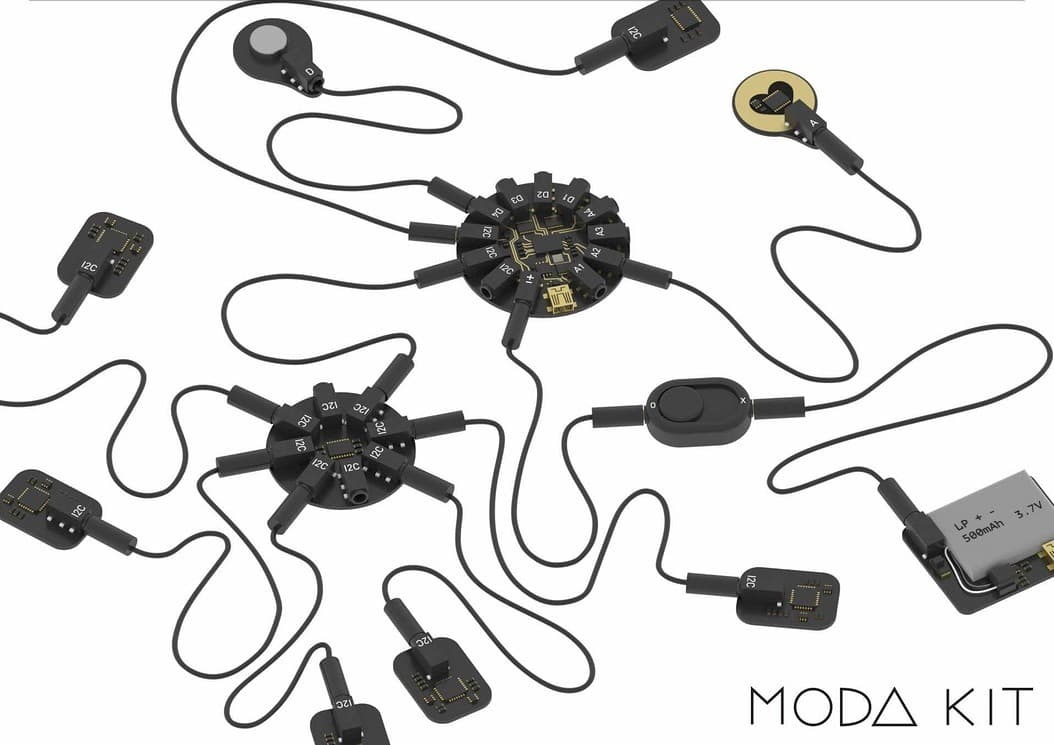
The MODA Kit. Soft cables and petal connectors instead of headers, because the thing being built is worn. 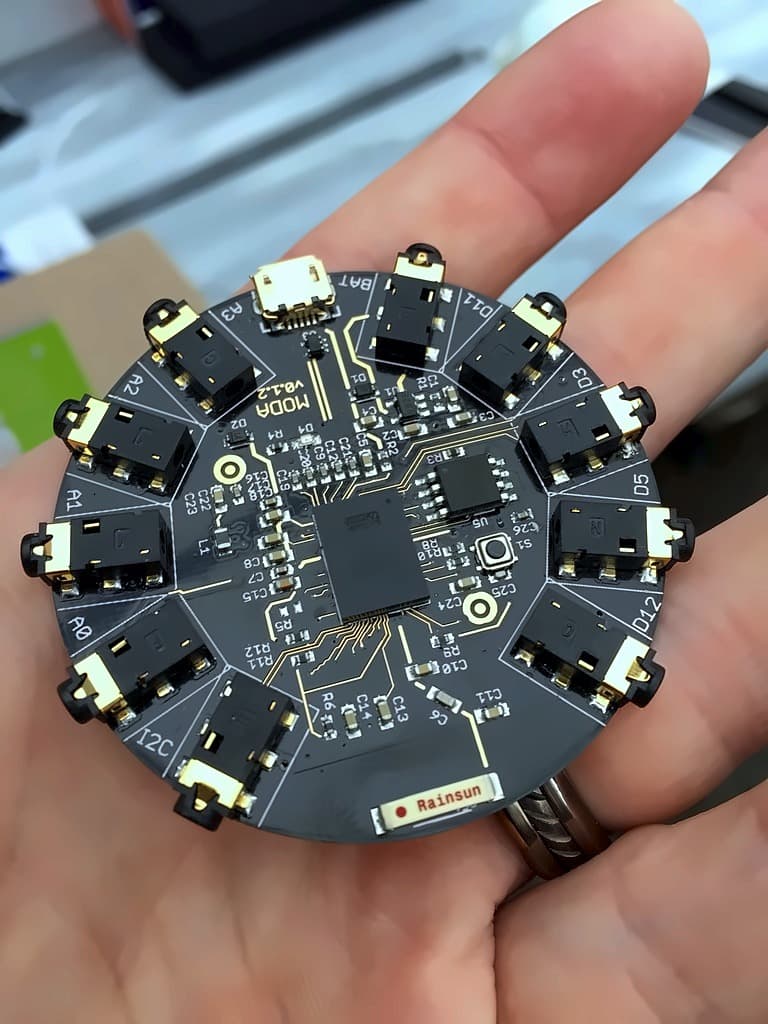
The hub, rev 0.1.2. Every port labelled on the silkscreen so a wearer, not a wirer, can assemble it. 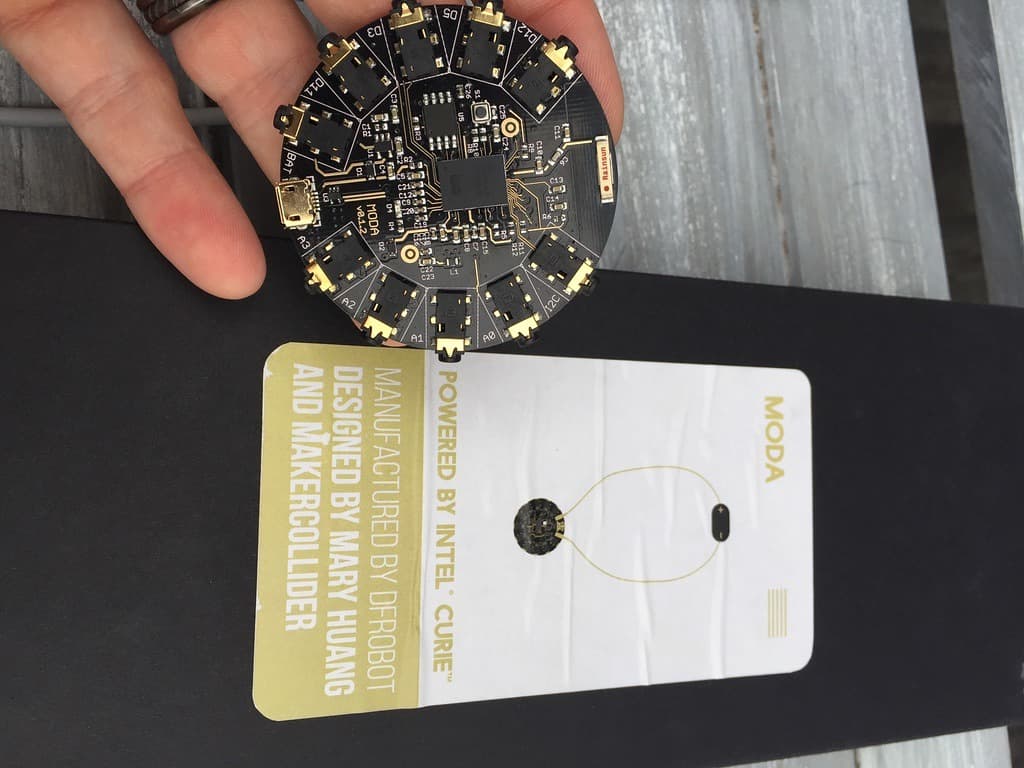
Designed by Mary Huang and MakerCollider, manufactured by DFRobot. Three parties, none of them Intel. 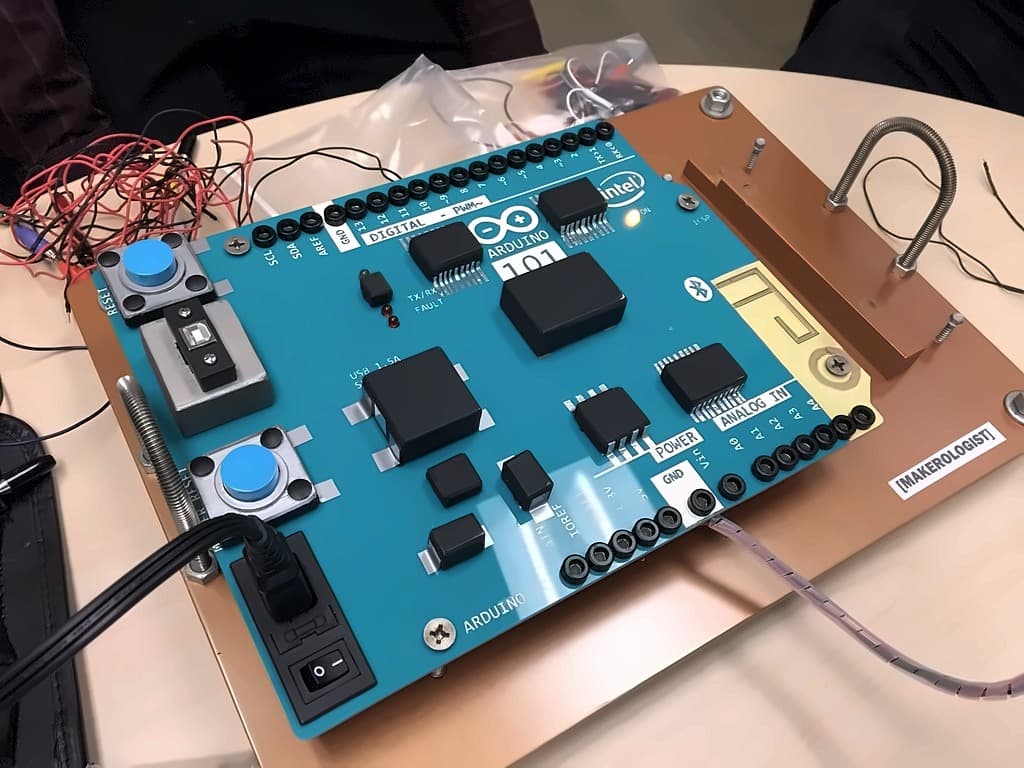
Arduino 101 — Curie's mass-market form — wired into a workshop rig.