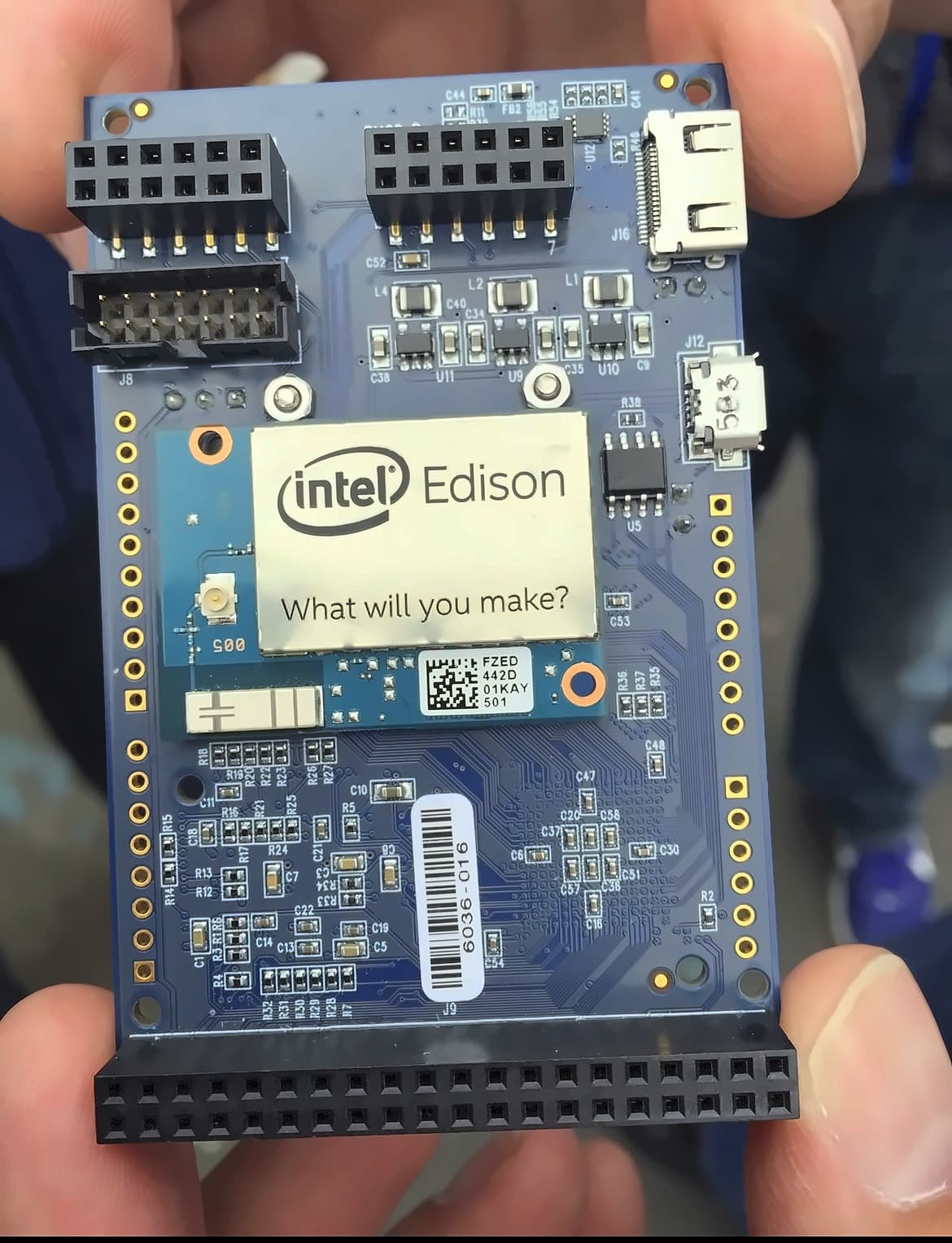
Intel Edison
Across Intel's developer relations division and New Technology Group, I supported more than 85 hackathons and ran dozens of workshops that taught tens of thousands of developers to use Intel Edison. I also led the Edison hardware ecosystem, helping hundreds of developers build and ship products on it.
Numbers
- 200+
- Developers worked with on Edison GTMbuilding embedded solutions on the module
- 2
- Clouds certifiedAWS IoT and Azure IoT Core
- 90+
- Developers at the re:Invent launch workshop
Problem
The module Intel sold has no ports, no power jack, and no network. It is a postage-stamp compute brick with a connector. The line printed on it is what will you make? On its own, the answer is nothing.
An embedded developer in 2015 was deploying to a fleet, which meant a cloud backend. Edison had no first-class path to one.
Solution
Across Intel's developer relations division and the New Technology Group, I supported more than 85 hackathons and ran dozens of workshops. Tens of thousands of developers learned Edison there. I led the hardware ecosystem around the module. Hundreds of developers built and shipped products on it, including 200+ I worked with directly on the go-to-market.
I led the team that certified Edison for AWS IoT. Documentation, developer kits, and sample code. I supported the AWS IoT launch at Amazon re:Invent and ran the launch-day workshop, 90+ developers in Las Vegas, on behalf of Intel. I led the Azure IoT Core certification the same way. Workshop materials, sample code, and documentation. Joint alliance workshops with Microsoft, Amazon, Google, and IBM covered industrial IoT gateways and Edison.
The carrier boards came from partners. TEKTYTE's Edi-Expand turns the module into a small computer: five USB ports, ethernet, storage, a barrel jack. SparkFun made stackable blocks, so you solder nothing and take only the battery, motor driver, or sensors the build needs. Seeed's Xadow set aimed at wearables. A tiny OLED, a barometer, a vibration motor, an NFC tag, a lithium pack.
Analysis
I certified Edison for both AWS IoT and Azure IoT Core. A developer cares whether the module works with the cloud their company already pays for.
Three partners shipped three boards. TEKTYTE, SparkFun, and Seeed each had a different idea of who the module was for. I let all three ship. The market picked one I would not have picked.
Result
Tens of thousands of units in volume sales across the Inventor Platform work. A developer could deploy Edison against either major IoT cloud on the day they evaluated it.
I worked with the OpenAPS team on a custom Explorer Board, and I organised its build team. OpenAPS is an open-source artificial pancreas that runs on Edison. Thousands of people use it to manage their blood sugar.
Photos
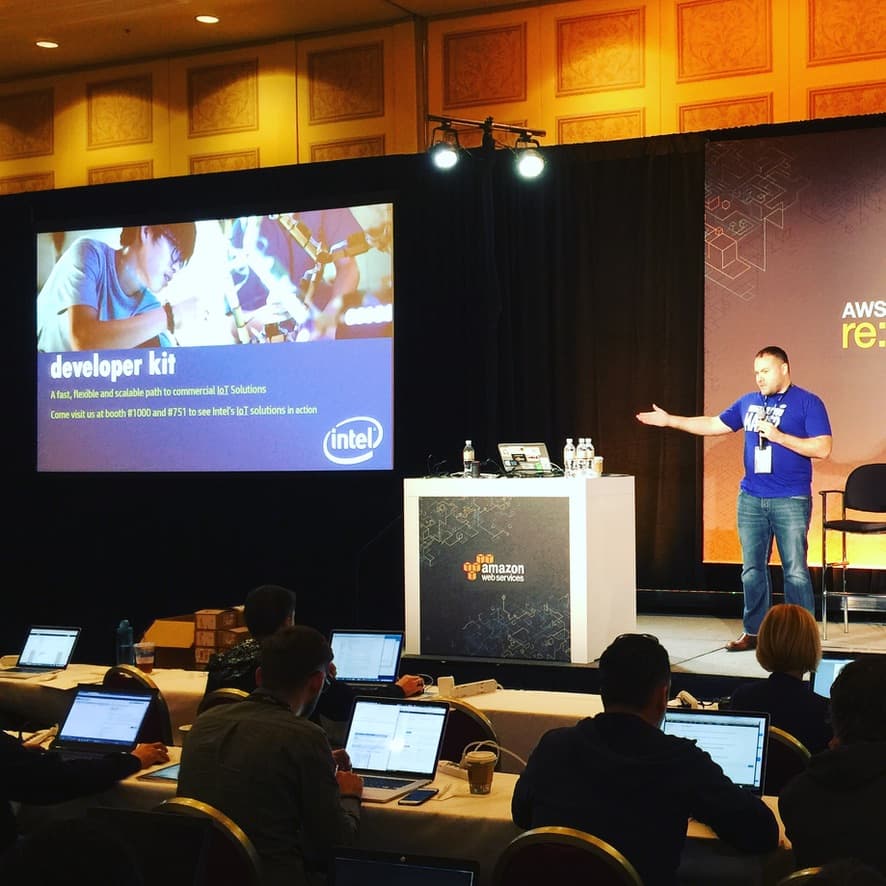
The AWS IoT launch-day workshop at re:Invent, 90+ developers. Every laptop in the room is mid-build on an Edison. 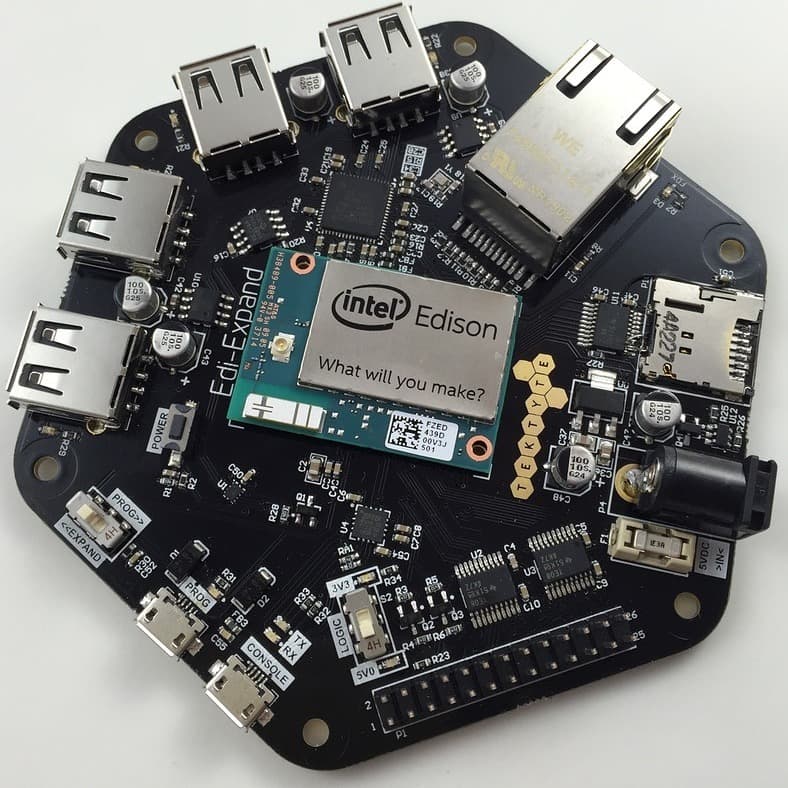
TEKTYTE's Edi-Expand. The module is Intel's; everything that makes it usable on this board is somebody else's. 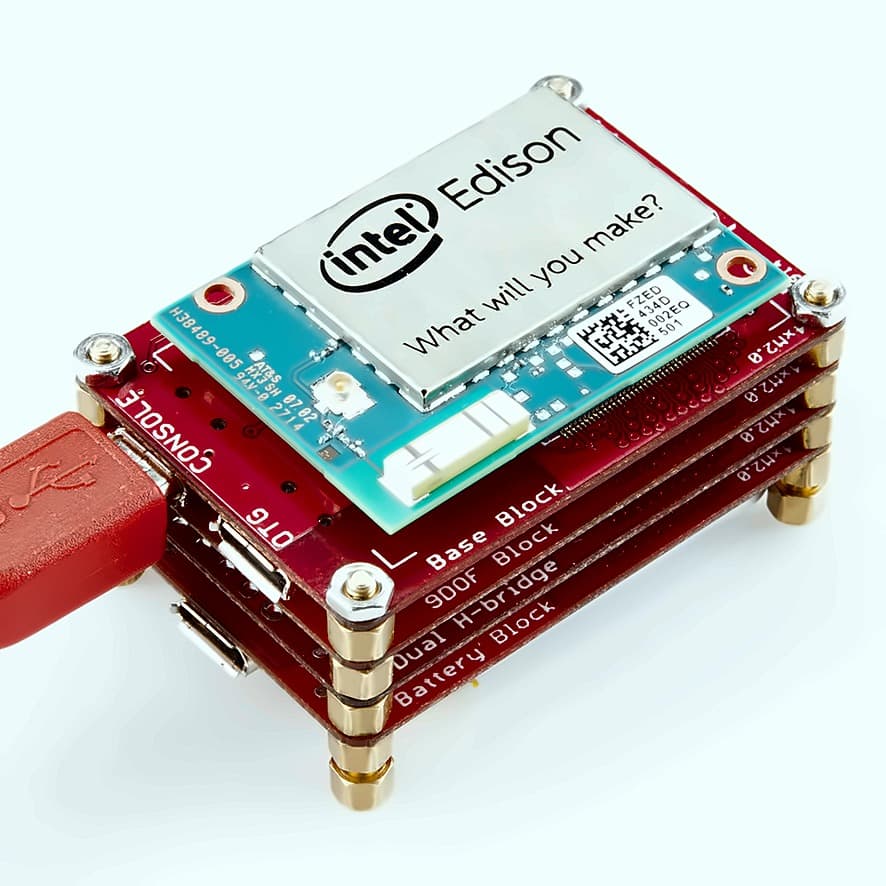
SparkFun went the other way — stack only the blocks your build needs. 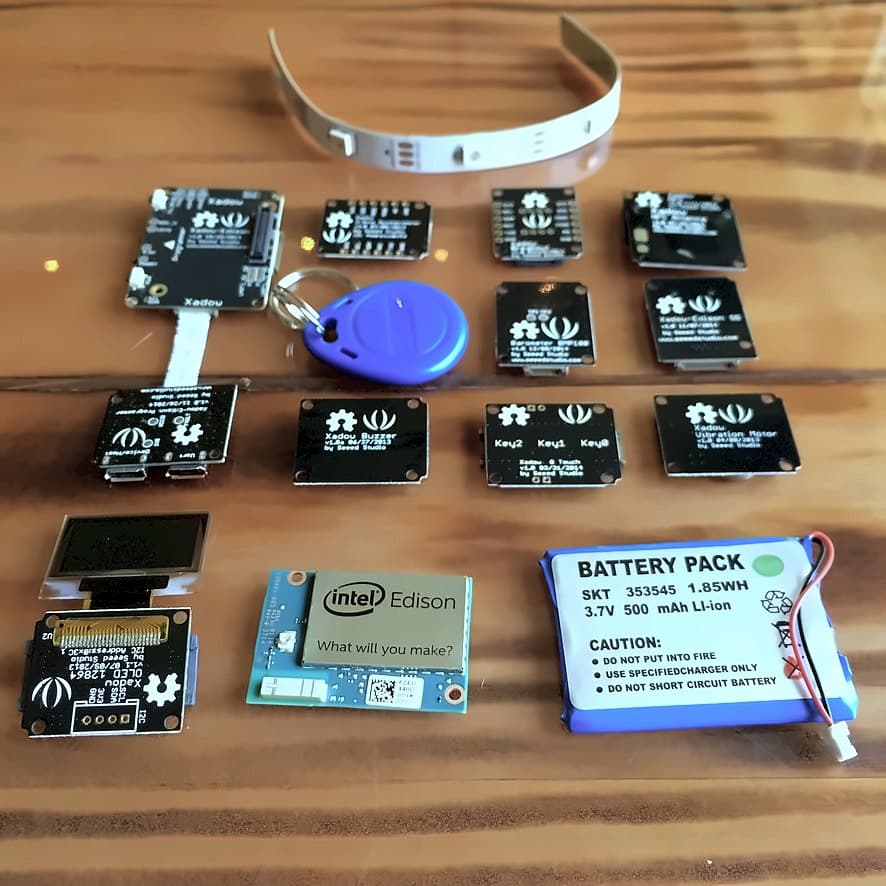
Seeed's Xadow set, aimed at wearables. Same module, a different idea about what it is for.