Generative Chains
Six browser demos working through one question — what a blockchain looks like when the thing doing the work is a generative model. Proof of Generation, a Lean proof chain over open Erdős problems, and two experiments in grown rather than drawn structure.
Claude Code / WebGL / Lean
Demo
Problem
Two essays I wrote in 2023 argued that generative models were going to end up inside consensus mechanisms, and I never built anything to go with them. An argument with no artifact is a blog post.
Solution
Six single-file pages, no build step, each taking a piece of the idea as far as it goes before it breaks.
The through-line is one claim: a generative model's output depends on its exact weights, so the hash of an output is a commitment only that model can satisfy. Artwork Chain tests it — every block is a painting made from one verse of Genesis plus the previous block's hash, and a fine-tuned knockoff cannot reproduce a single one. Prompt Mining turns it into Proof of Generation and runs the race; Request for Art plots it. Living Rules and Bloom Chain go the other way, from chains of blocks to grids of cells.
Analysis
The demos are built to find where the idea fails rather than to show it working, which is why Prompt Mining and Request for Art are both here. Real image models are noisy, so a miner can find the right prompt and still miss the hash — and that flaw is the most useful thing on the page.
Fixing it is what produced Challenge Vaults: swap the noisy model for a perfect checker. That idea outgrew this repo and is now its own project.
Result
Six working demos, each one self-contained and runnable from a clone with nothing but a static server.
Every model, network, prover and result is simulated in the browser. Nothing here touches a real chain, and the page says so.
Screens
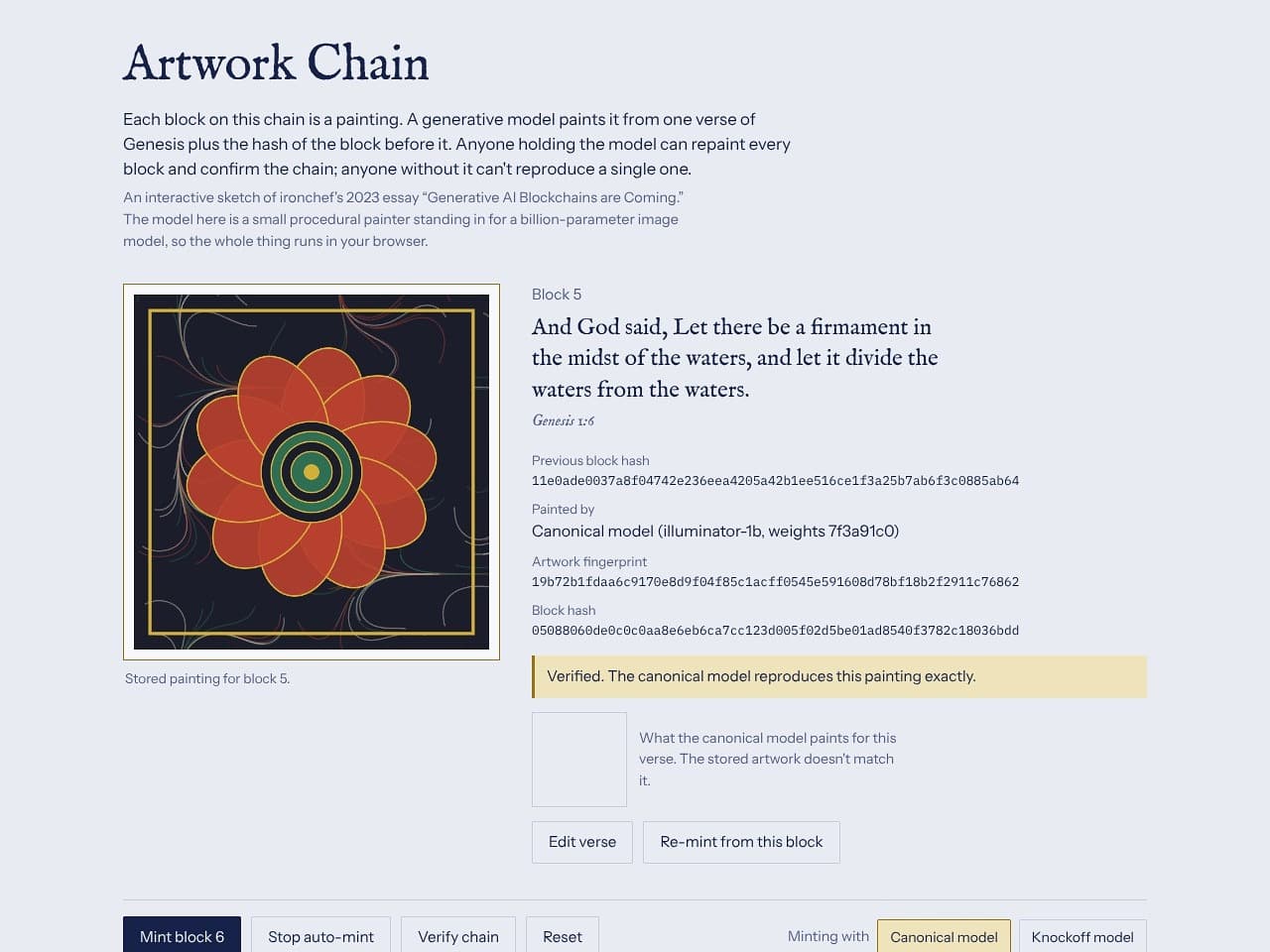
Artwork Chain. Each block is a painting made from one verse plus the hash before it. The canonical model reproduces it exactly; the fine-tuned knockoff fails. The weights are the key. 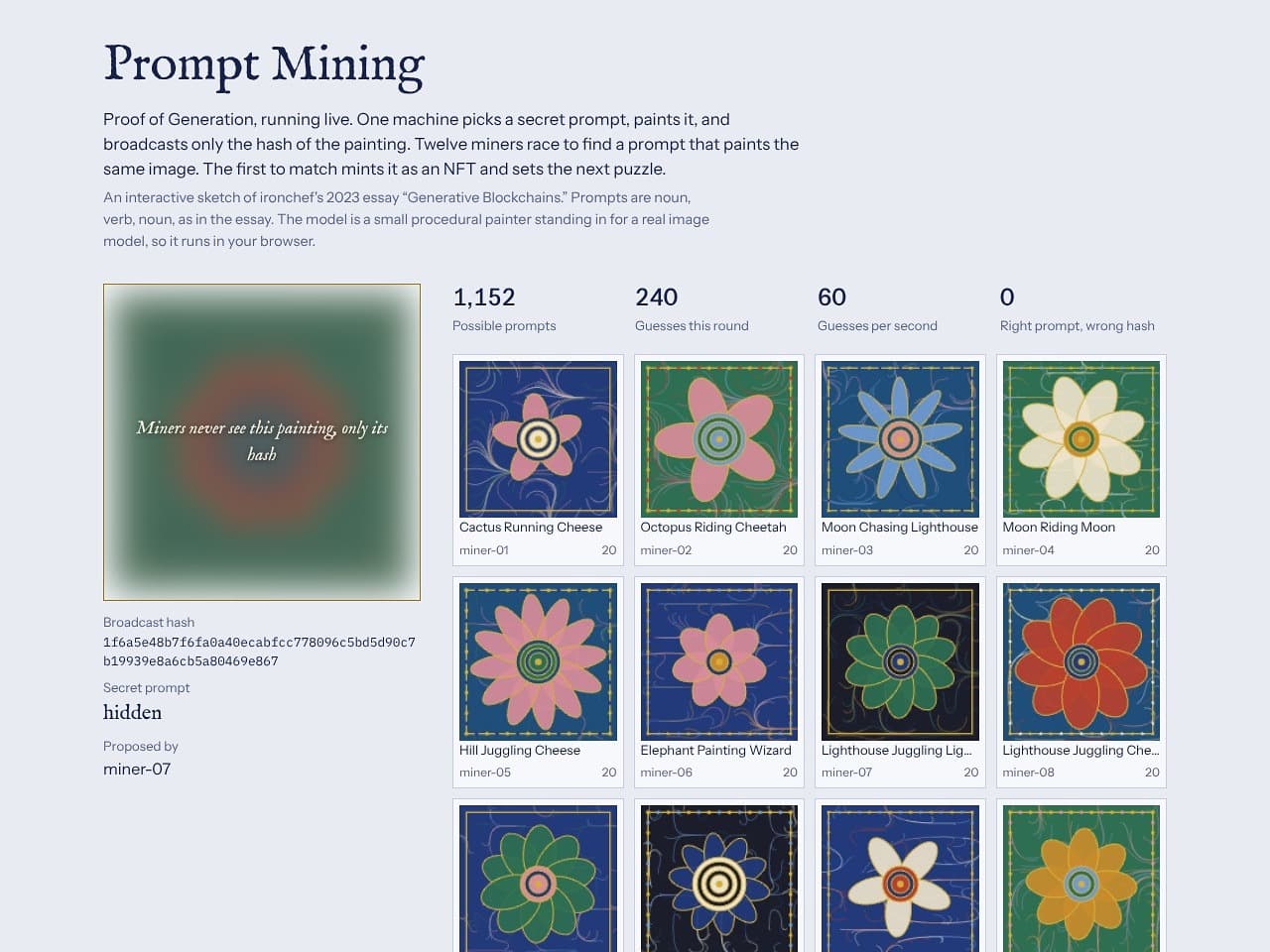
Prompt Mining — the Proof of Generation demo. One machine paints a secret prompt and broadcasts only the hash. Twelve miners race to find a prompt that paints the same image; first match mints it and sets the next puzzle. 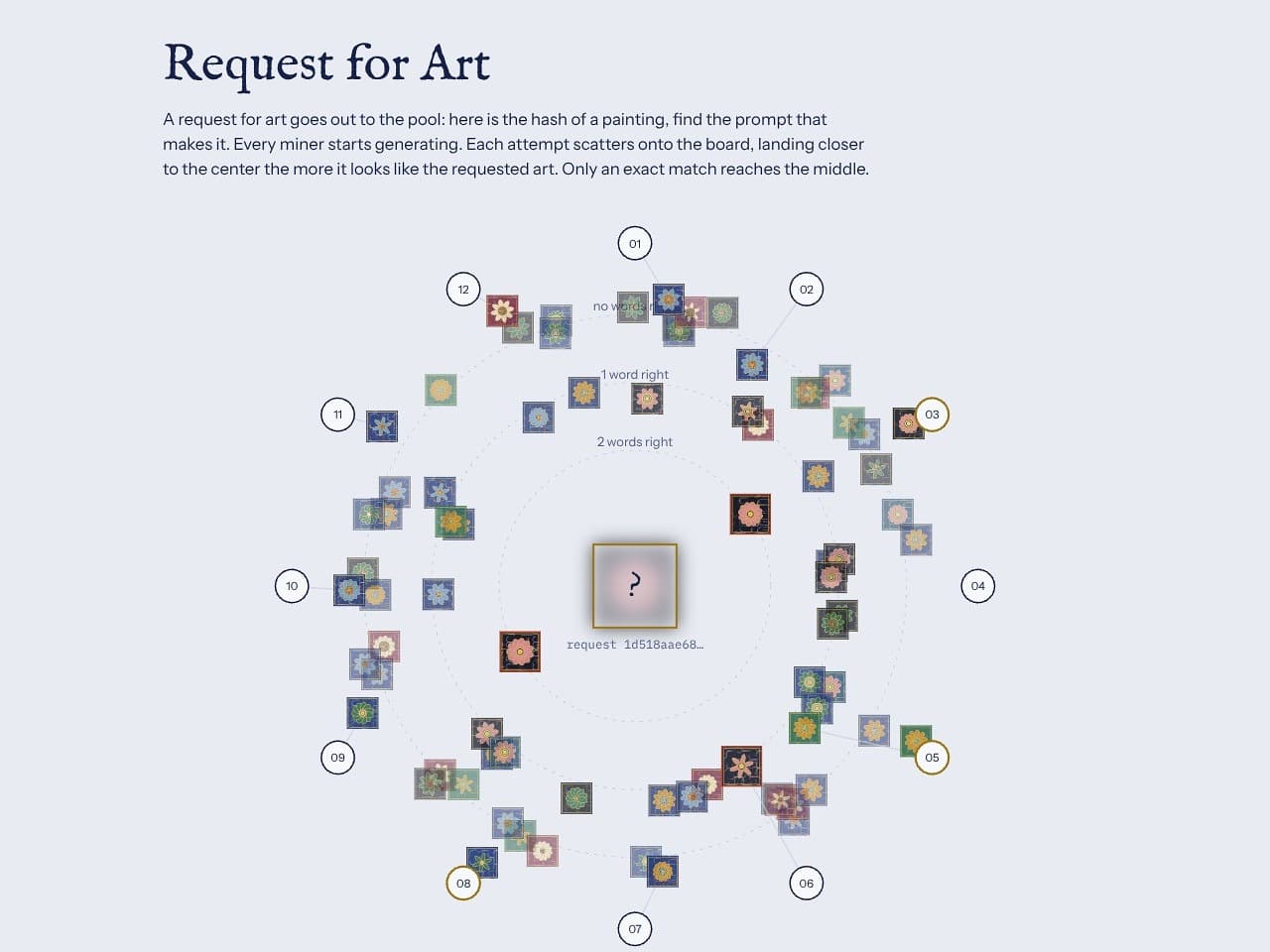
The same race as a scatter plot. Attempts land closer to the center the nearer they get, and only an exact match reaches the middle — which is also where the idea breaks. 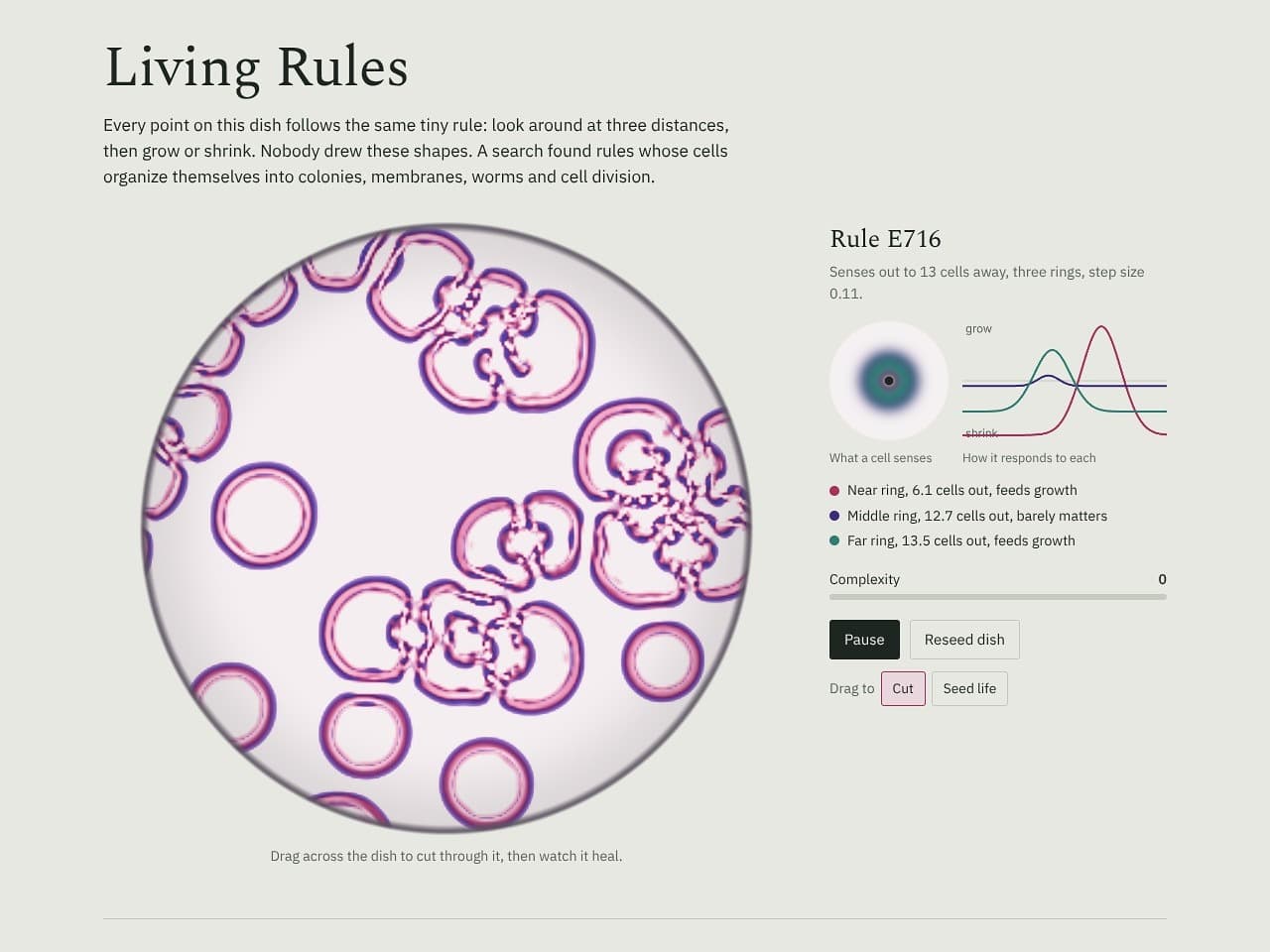
Living Rules. One tiny rule per cell — look at three distances, then grow or shrink. Nobody drew these shapes; a search found rules whose cells organize themselves. 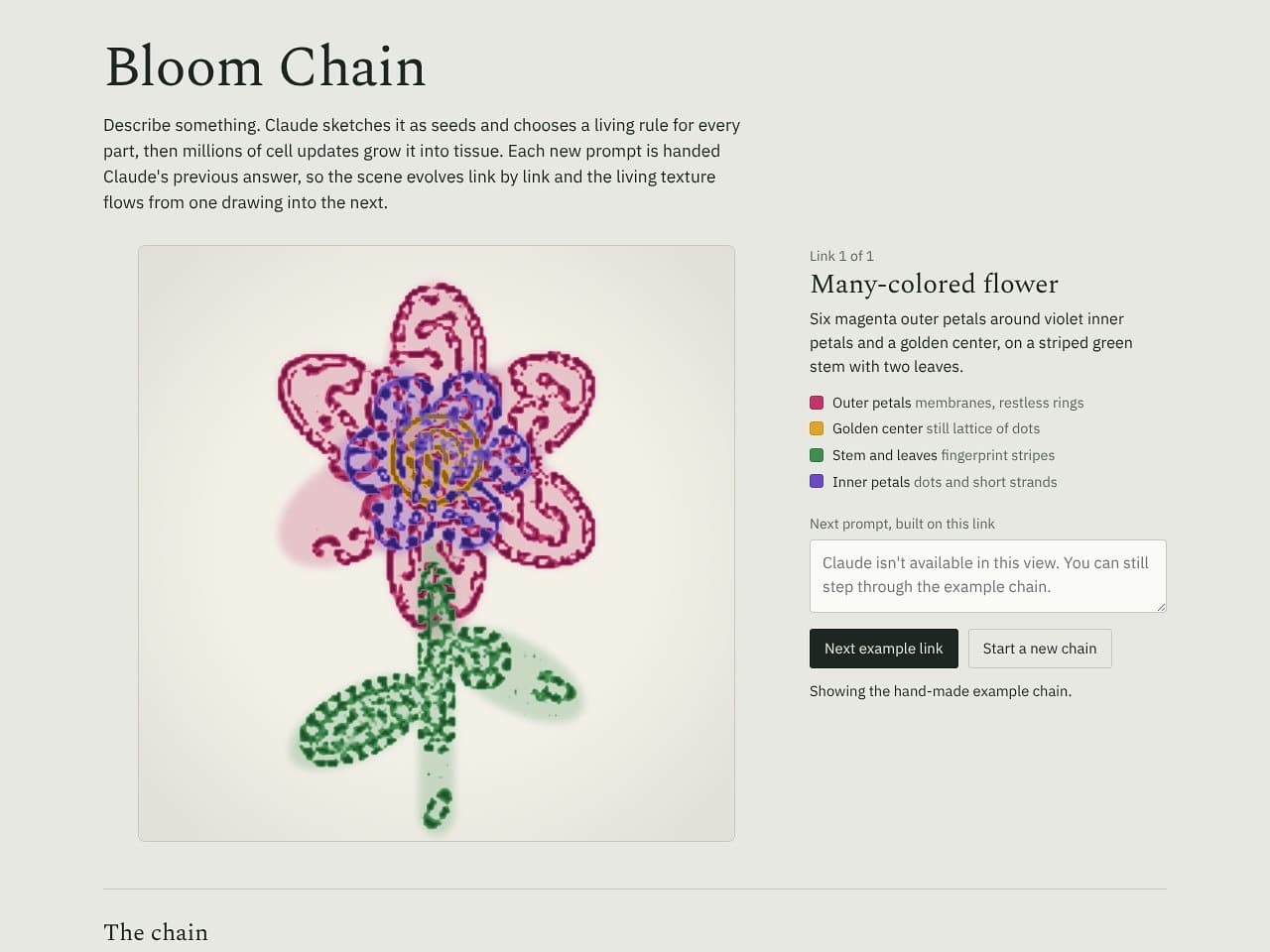
Bloom Chain. Describe something, and Claude picks a living rule for each part and grows it. Each new prompt is handed the previous answer, so the scene evolves link by link.