Docket
Autonomous legal discovery — ingests a case file, indexes every document, drafts responses request by request, and keeps one screen showing what is blocked and what is due.
Claude Code / Google Workspace APIs / SQLite
Problem
Discovery is the expensive part of most legal matters and almost none of it is legal reasoning. It is document management against a deadline: find every record, work out which request it answers, draft the answer, and know what is still outstanding.
The failure mode in a long case is not being wrong. It is losing track of which of forty open threads has a date attached.
Solution
End to end. Docket ingests the case file from mail and drive, catalogs and deduplicates every document, maps each discovery request to the records that answer it, drafts a response with its source cited, and grades each draft for confidence and risk so the weak ones surface first.
The finance view reconciles every transaction in the statements into categories and reconstructs the monthly picture — the most tedious task in any matter involving money, and the one most likely to contain an arithmetic error somebody else finds.
Analysis
The summary screen is the part I would keep if I had to throw the rest away: everything blocked, why, and the next concrete action.
Grading drafts for confidence and risk matters for the same reason. An autonomous system that produces forty answers of unknown quality has moved the work rather than done it; one that tells you which six to read first has actually helped.
Result
One screen that answers what is blocked and what is due, over a case file that would otherwise be a folder and a spreadsheet.
Screens
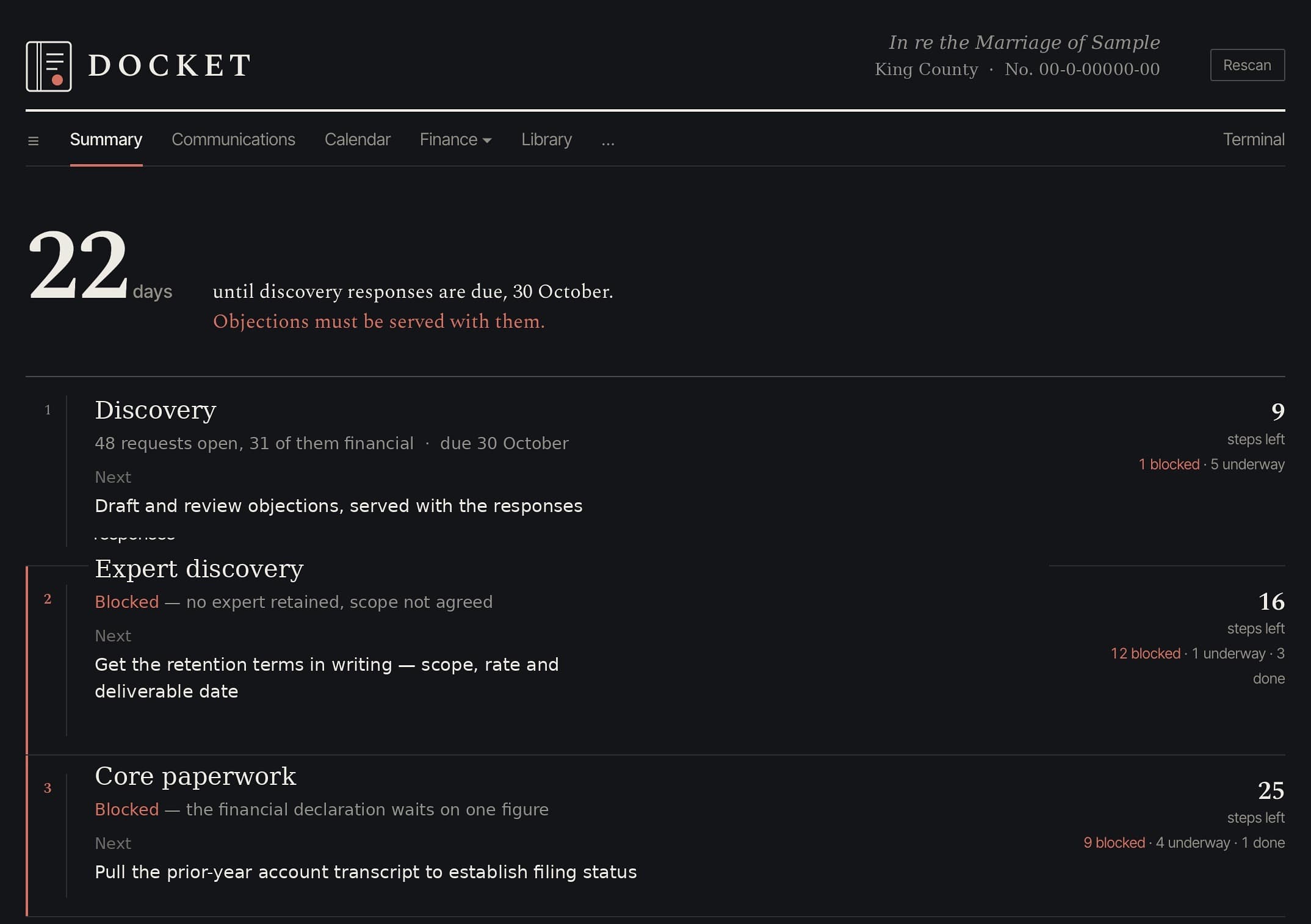
One screen, one question — what is blocked, and what is the next thing to do about it. 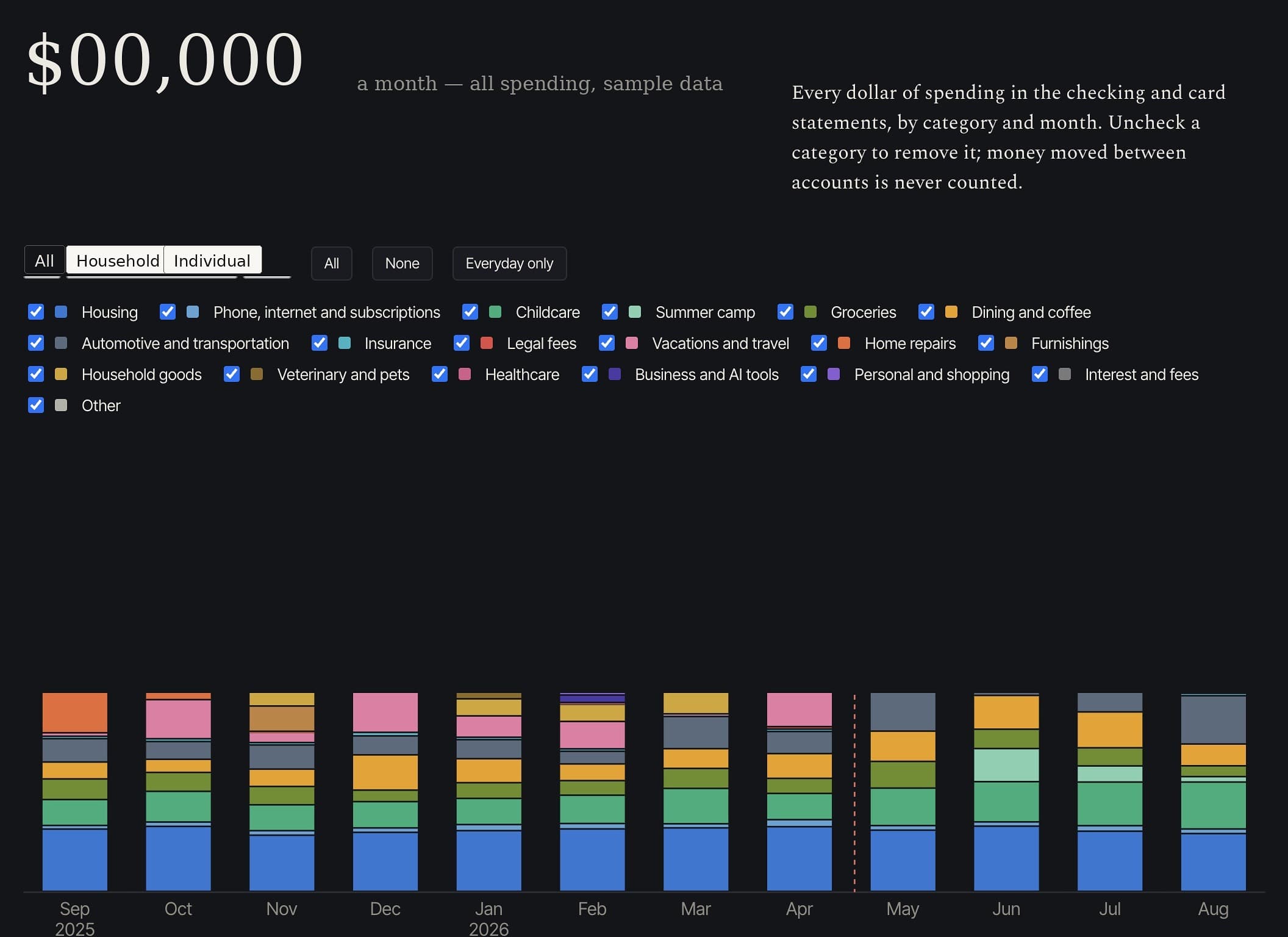
Every transaction in the statements, categorised and reconciled. Transfers between accounts are excluded so nothing is counted twice. 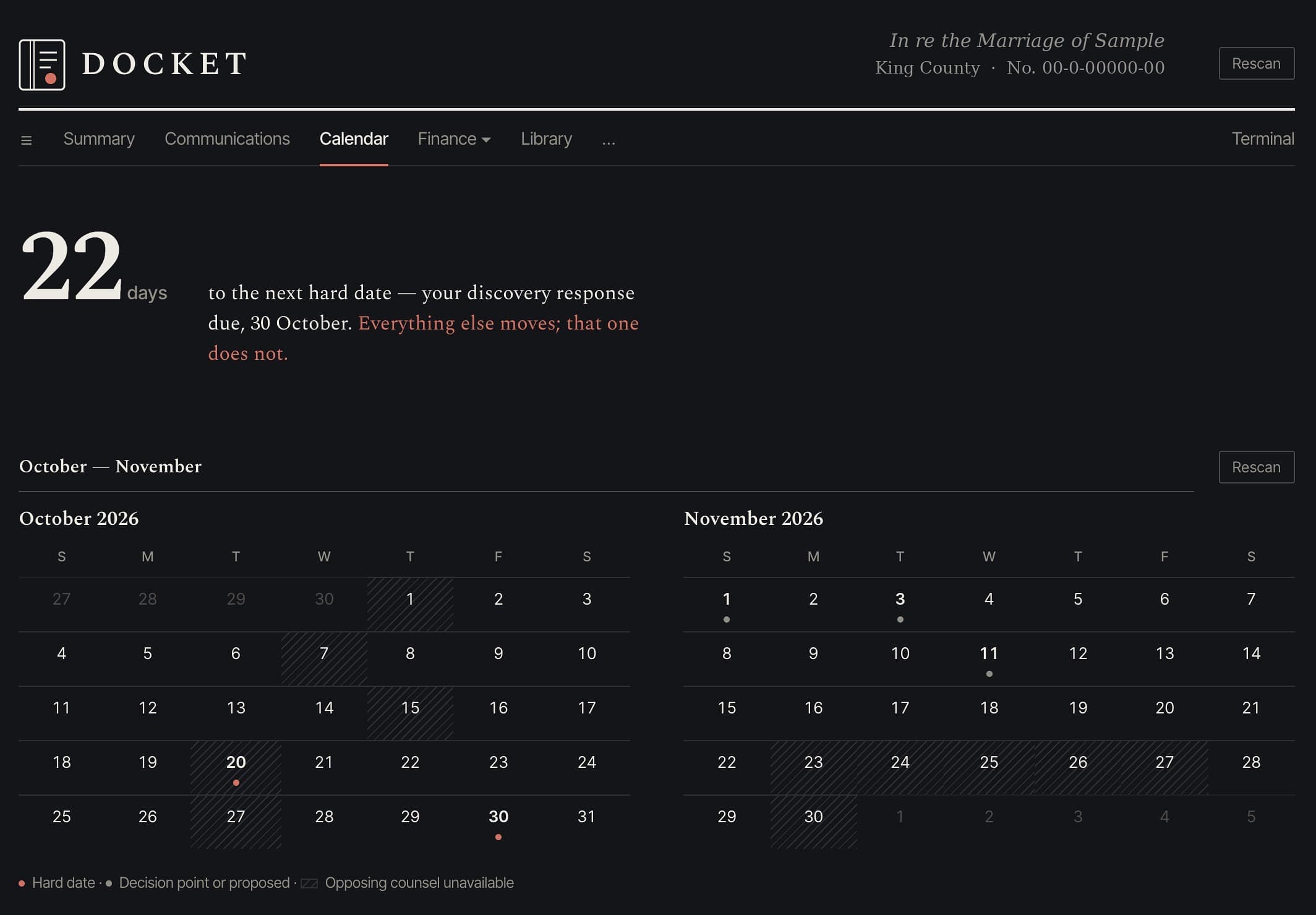
Hard dates against soft ones. Most deadlines move; the ones that do not are the only ones worth tracking closely.