Fold for Covid
At Arm, I helped bring Rosetta@home and Folding@home to the Arm architecture during the COVID pandemic, in collaboration with the University of Washington, Packet, Neocortix, Linaro, 96Boards, and balena. Thousands of developers ran it on their Raspberry Pis, helping fold proteins to map the COVID spike protein.
Numbers
- 18
- Developers in the task forceorganised across Arm, the partners and the volunteer effort
- 6,778
- Machines contributingas shown on the project site
- 14
- Rosetta@home team rankof all teams, at the time of the balena readout
- 718
- Contributors on the team
- 85,914,327
- Total credit
Problem
The Baker Lab at the University of Washington was searching for proteins that bind to the COVID-19 spike. Rosetta@home ran on x86 only.
A lot of idle machines are something else. Phones, single-board computers, Raspberry Pis, old laptops, Arm boards in drawers. The people holding them were not going to compile a client to join.
Solution
At Arm I helped bring Rosetta@home and Folding@home onto the architecture. I organised an 18-developer task force across seven organisations. The University of Washington's Rosetta team owned the science. Arm, Packet, Neocortix, Linaro, and 96Boards covered silicon and infrastructure. Balena handled delivery.
Setup came down to an image you flash with balenaEtcher. No toolchain, no build, no terminal. Thousands of developers ran it on Raspberry Pis and spare boards, folding proteins toward a map of the COVID spike.
Analysis
The port is the interesting half. The flashed image decided how many people finished. Every setup step we removed brought more contributors.
Eighteen developers, seven organisations, April 2020. No shared manager, no shared deadline, no budget line. The work was obvious and urgent, so it held. I would not count on that twice.
Result
6,778 machines contributing. Fold for Covid finished 14th of all Rosetta@home teams, on 718 contributors and 85,914,327 credit. Ahead of Team AnandTech, five places behind Hewlett-Packard Enterprise, twelve behind CERN. Most of that hardware had been sitting in a drawer.
Photos
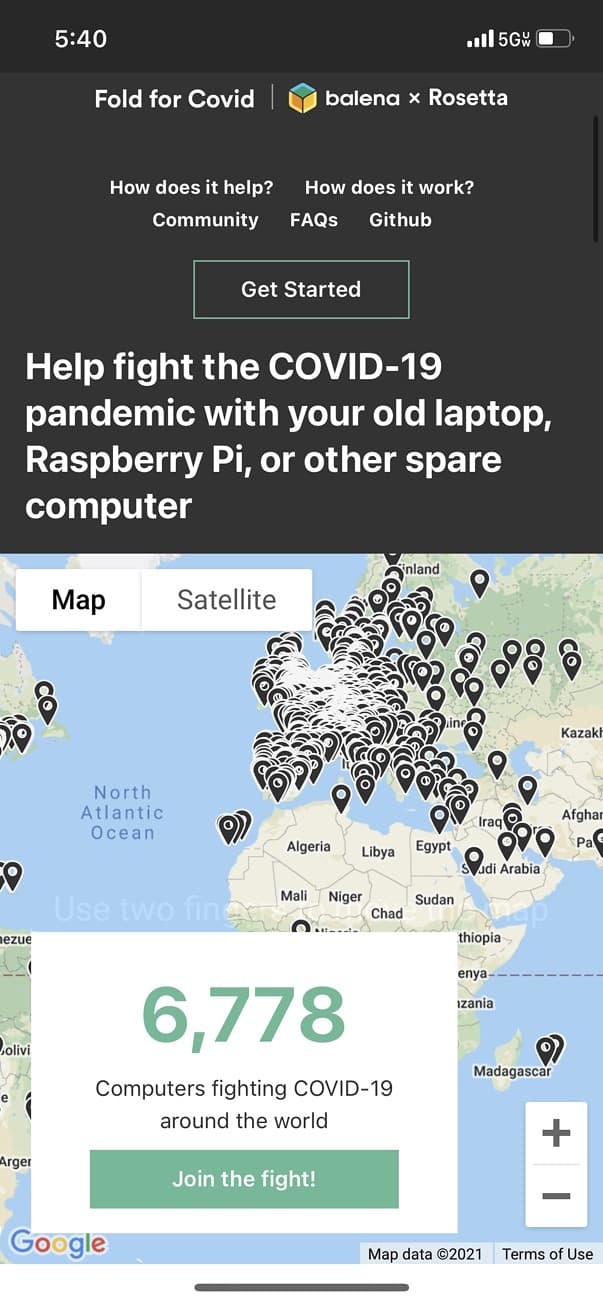
6,778 machines, most of them hardware that was otherwise sitting in a drawer. 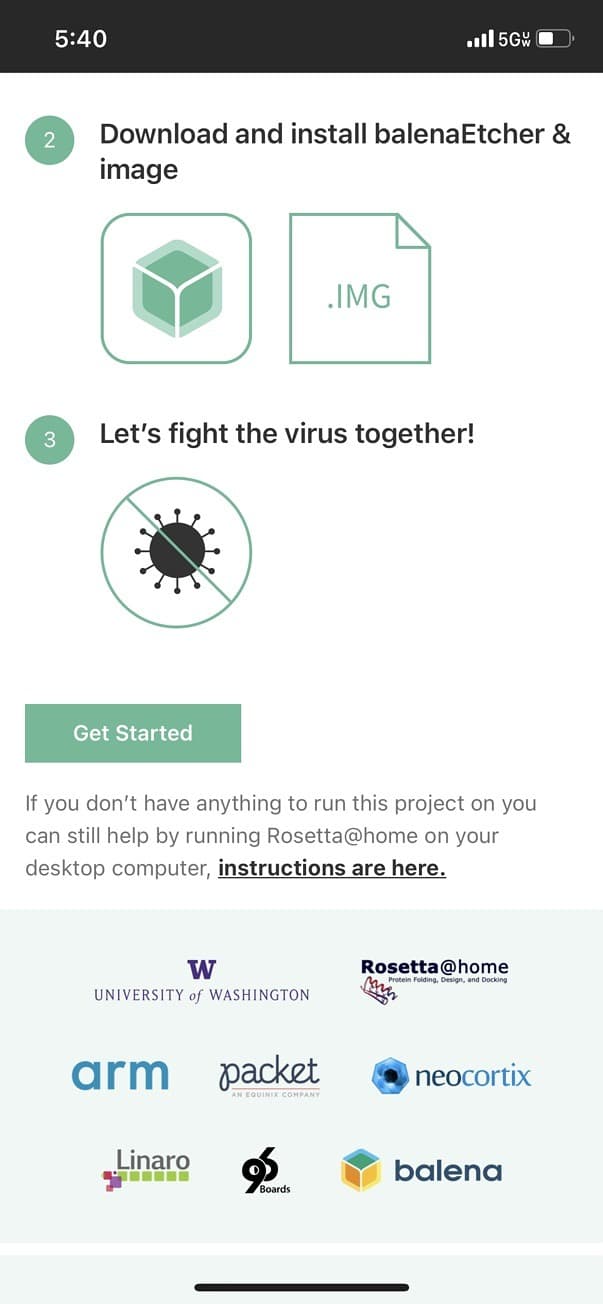
Two steps and a flashed image. Every step removed is contributors gained. 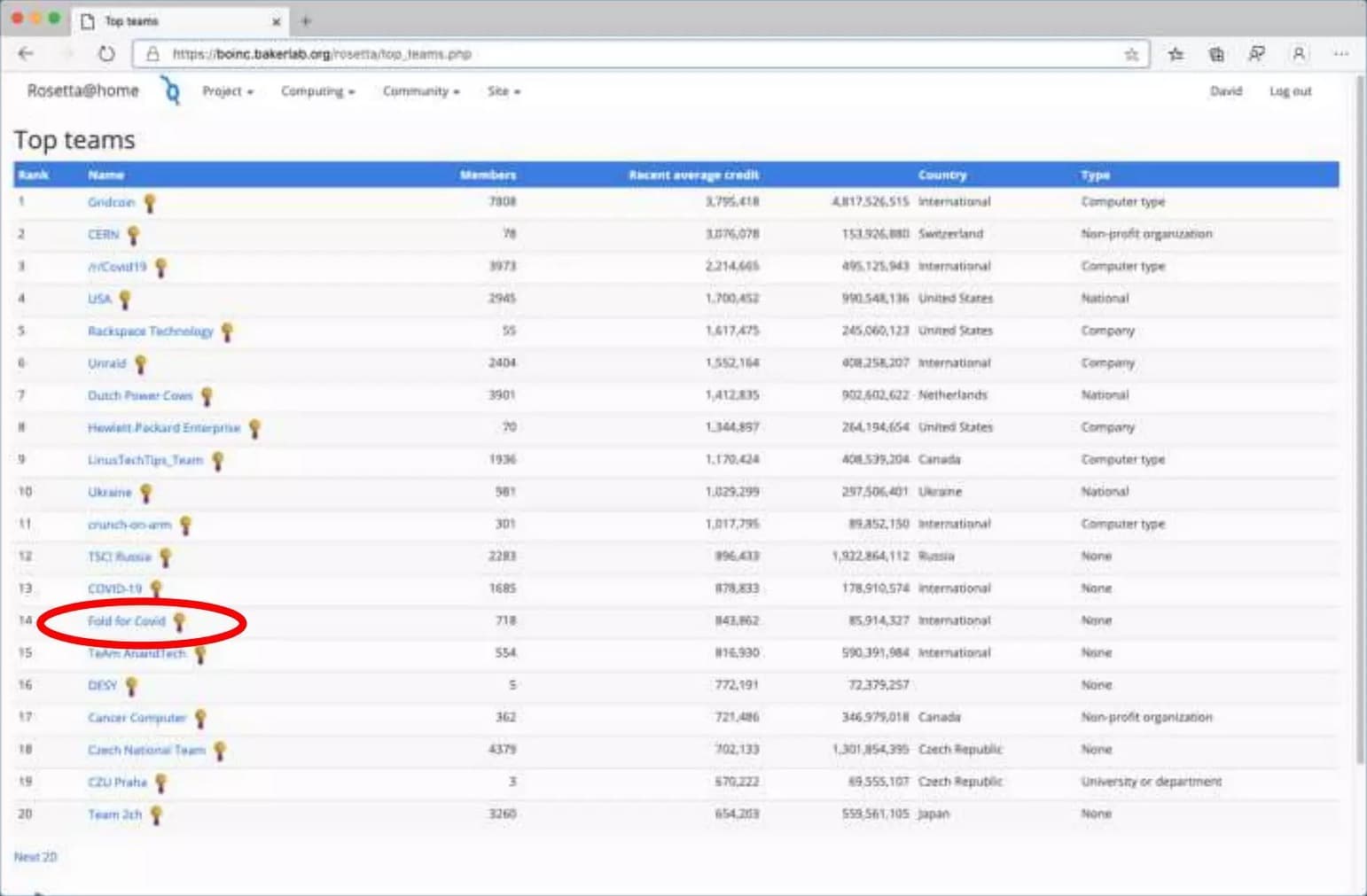
The result that counts. Fold for Covid finished 14th of all Rosetta@home teams — above Team AnandTech, five places below Hewlett-Packard Enterprise, twelve below CERN.