The Autonomous Robot Challenge
An open robotics challenge run with Hackster.io. Build a low-cost autonomous robot on Arm; what came back was rovers, delivery robots, donkey cars, underwater and aerial platforms, and a trash-sorting robot.
Numbers
- 507
- Participants
- 203
- Hardware applications
- 28
- Projects submitted
- $10,000+
- Prize pool
Problem
Arm is in almost every robot ever built and almost nobody building one thinks of it that way. The architecture is underneath the board, so the developer's relationship is with the Raspberry Pi or the Jetson in their hand, not with the instruction set inside it.
Changing that does not happen through documentation. It happens when someone builds something they are proud of and knows what it ran on.
Solution
An open challenge run with Hackster.io: build a low-cost autonomous robot on Arm, with a prize pool over $10,000 and hardware grants for people who applied and could make the case for what they would do with it.
I set the cost floor as low as I could get it. That one decision separates a challenge that draws 500 people from one that draws 50, because the most interesting ideas rarely arrive with a hardware budget behind them.
Analysis
Look at the funnel. 507 took part, 203 applied for hardware, and 28 submissions came in at the end. The drop-off measures what building a physical robot costs somebody in evenings and weekends, which is a problem software hackathons never have to solve.
The hardware grants earned their administrative overhead against exactly that. Every unit shipped converted somebody who would otherwise have read the rules and closed the tab.
Result
Twenty-eight finished robots across a wider range than a brief would have produced: a Mojave desert rover, a search-and-rescue assistant, a radar-based water-seeking robot, underwater and aerial platforms, several donkey cars and a beach-going trash collector.
LitterBug, the trash rover, has drawn 11,000 views on its project page. OASIS was built to deliver food in Detroit food deserts. Project Kong was built for a child with special needs. None of those were on the prompt; all of them ran on Arm, and their builders know it.
Photos
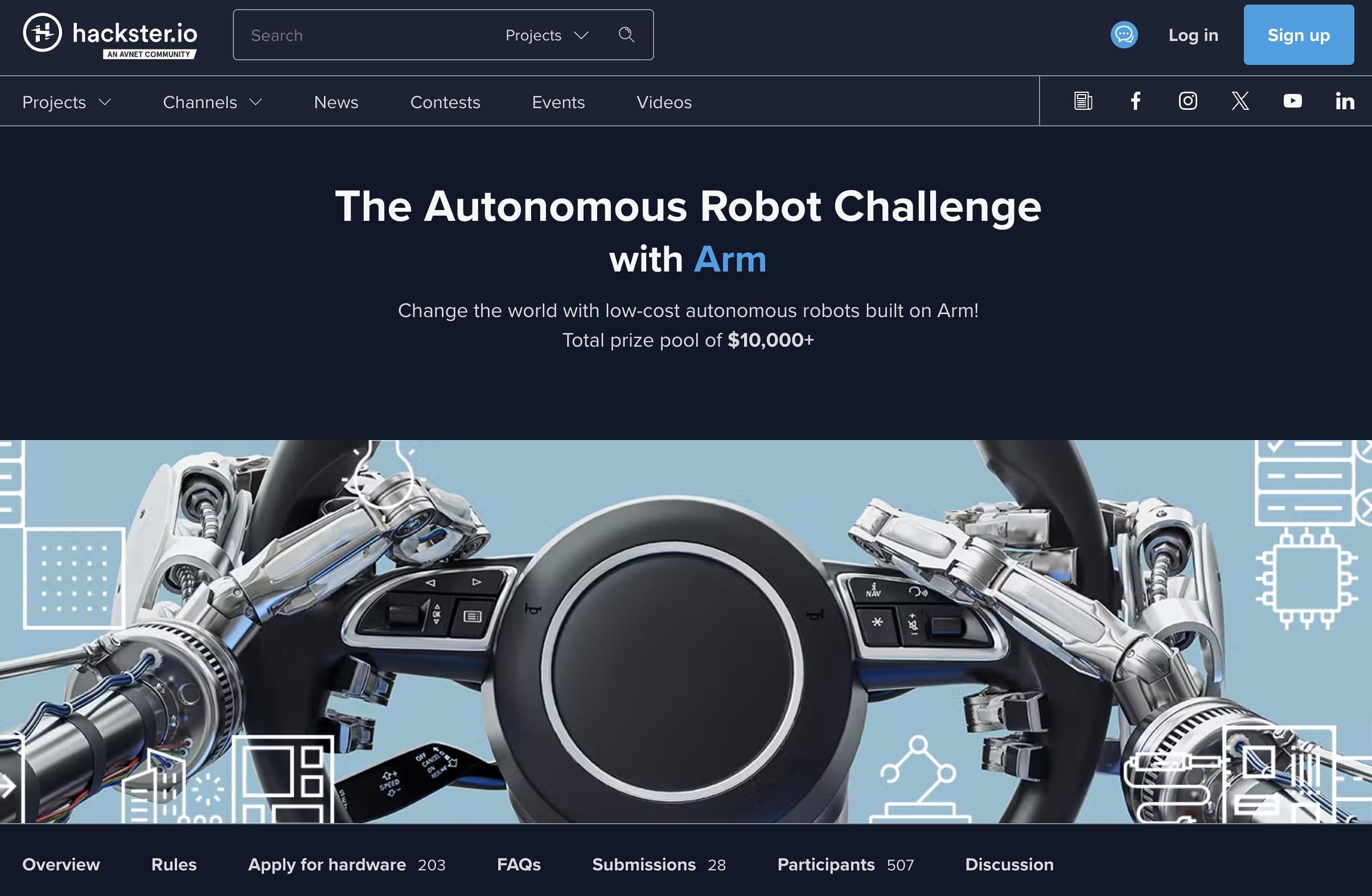
The contest page, with the counts on it: 203 applied for hardware, 507 took part, 28 finished and submitted. 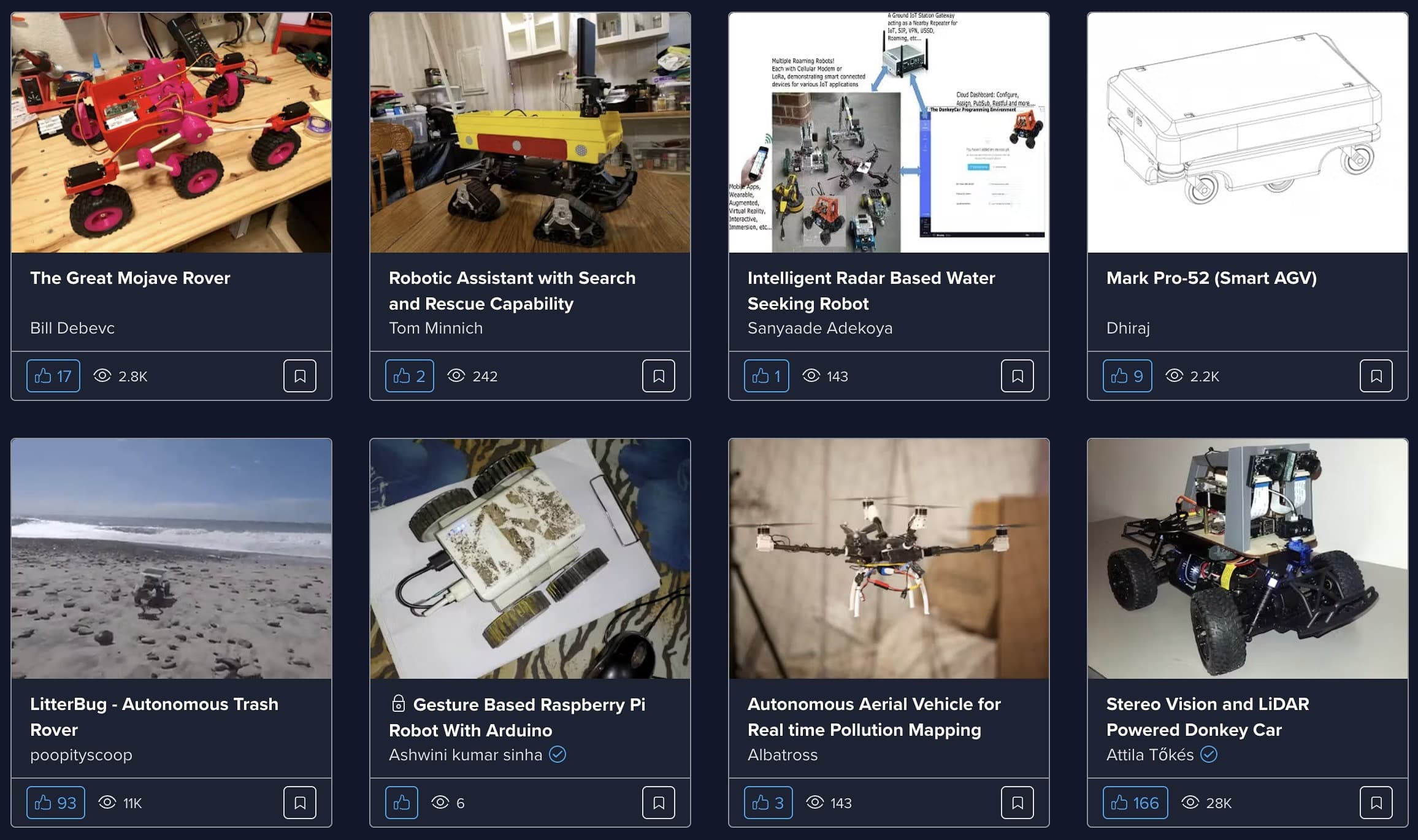
What people built. LitterBug, a trash-collecting beach rover, drew 11,000 views — more than most of Arm's own content that year. 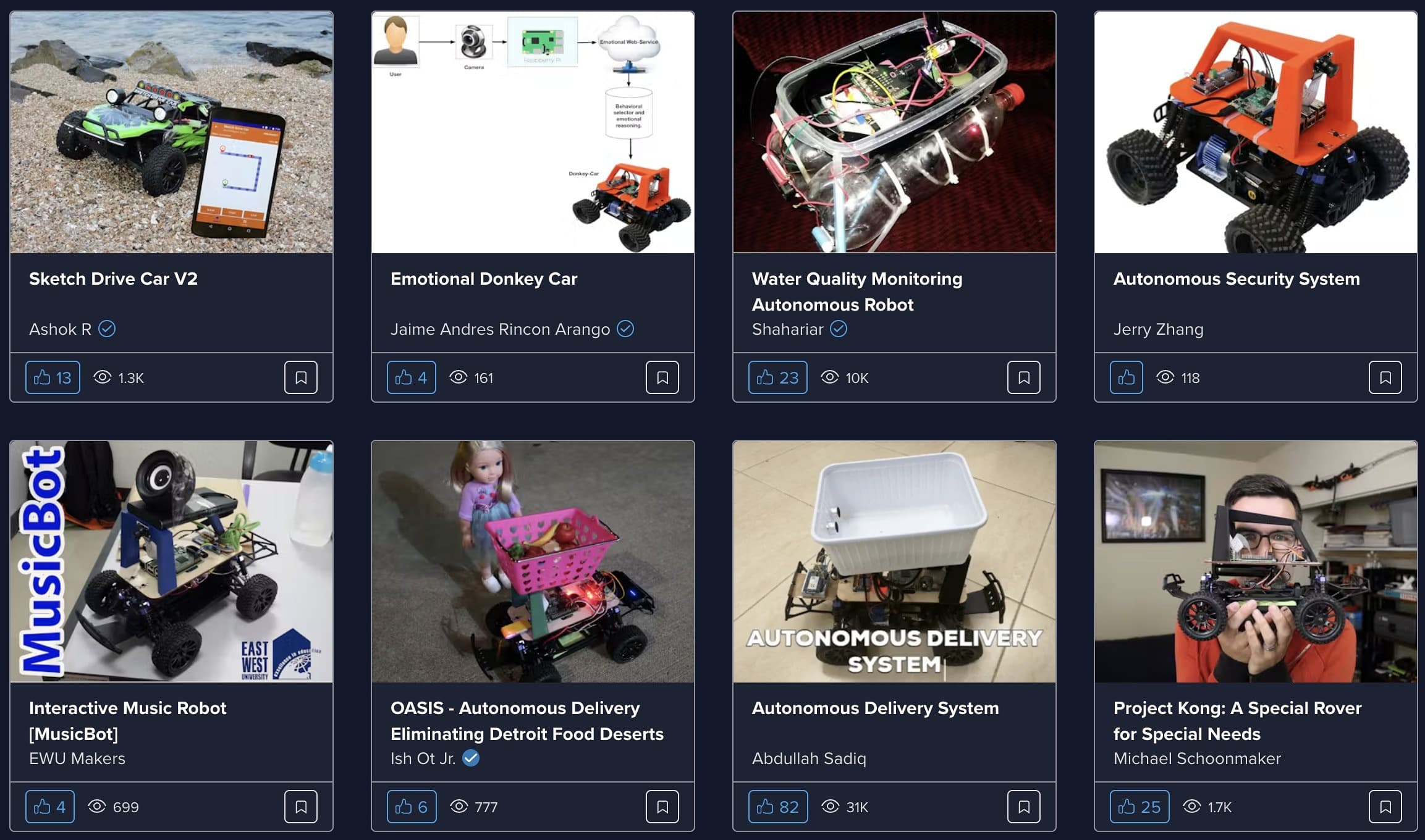
The range is the point: a food-desert delivery rover from Detroit, a water-quality monitor, a music robot from a university team, and a rover built for a child with special needs.