Arm AIoT Dev Summit
Two days at the Computer History Museum covering IoT from edge to cloud, intelligent and autonomous machines, and AI from development through deployment. Half on stage, half hands-on with hardware in the room.
Numbers
- 500+
- Developers
Problem
AIoT was being discussed in two separate conversations that never met: cloud people talking about models, and embedded people talking about boards. A developer trying to deploy intelligence at the edge needed both and got whichever conference they picked.
Solution
Two days at the Computer History Museum in Mountain View, 2–3 December 2019, covering IoT from edge to cloud, intelligent and autonomous machines, and AI from development through deployment.
Half on stage, half hands-on with hardware in the room. Every attendee went home holding a board.
Analysis
I split the programme deliberately. The keynotes and panels set the frame: the latency arithmetic behind the case for edge compute, the cost table showing which robotics platform a hobbyist can start on, Ciira wa Maina on deploying AI where bandwidth and power are the binding constraints. Then everyone went into a room and built.
Free hardware for every attendee was the expensive line on the budget. I defended it because a developer who has to buy a board before evaluating it mostly does neither.
Result
More than 500 developers over two days.
My favourite moment was unscheduled: people in the lounge between sessions, assembling a drone frame on a coffee table.
Photos
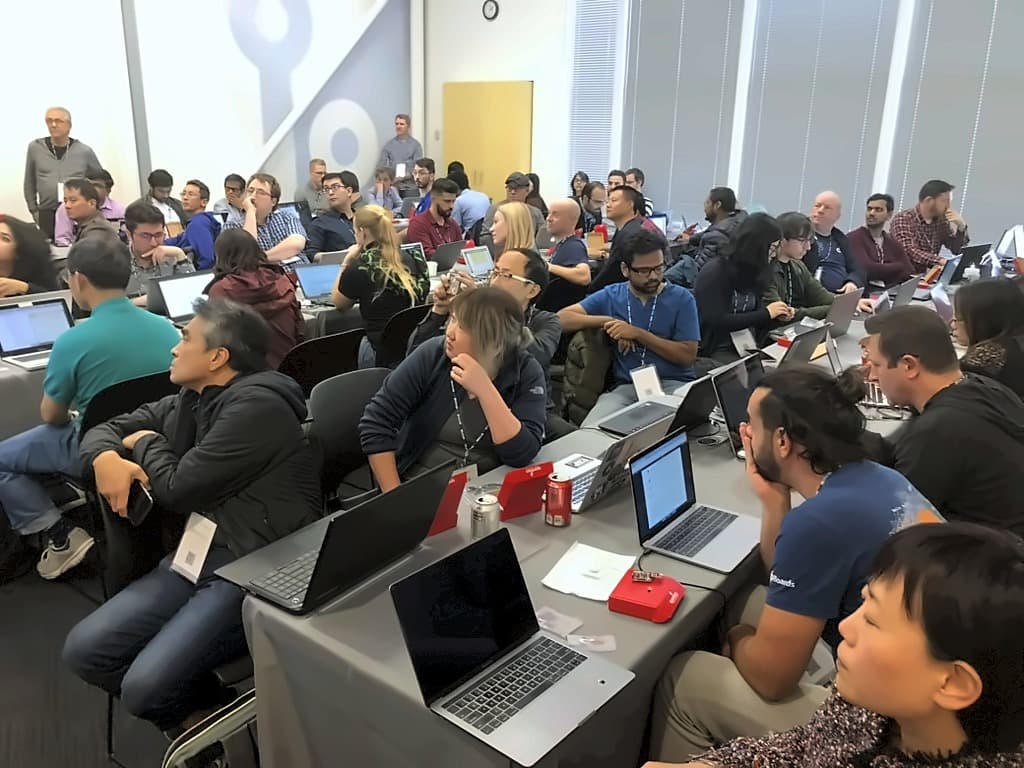
The half of the programme that mattered most. Laptops open, boards out, everyone building the same thing at once. 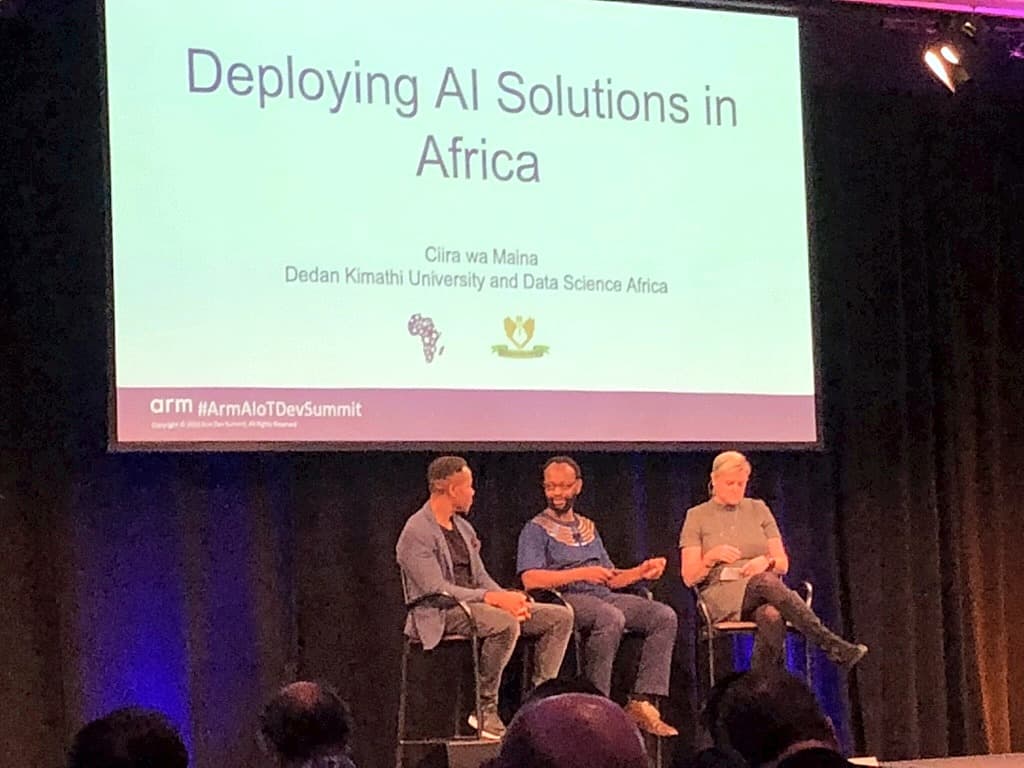
Ciira wa Maina on deploying AI in Africa — the session that most changed how people in the room framed constraint. 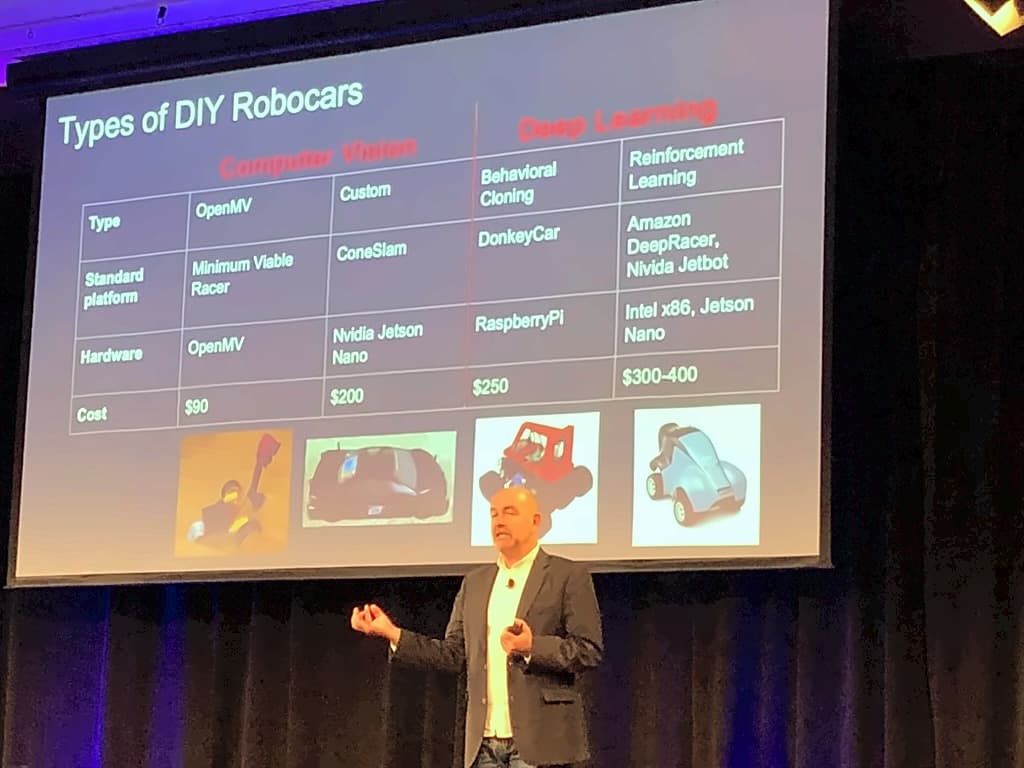
A full cost breakdown of every DIY robocar platform, from a $90 OpenMV racer up. Price is the adoption curve. 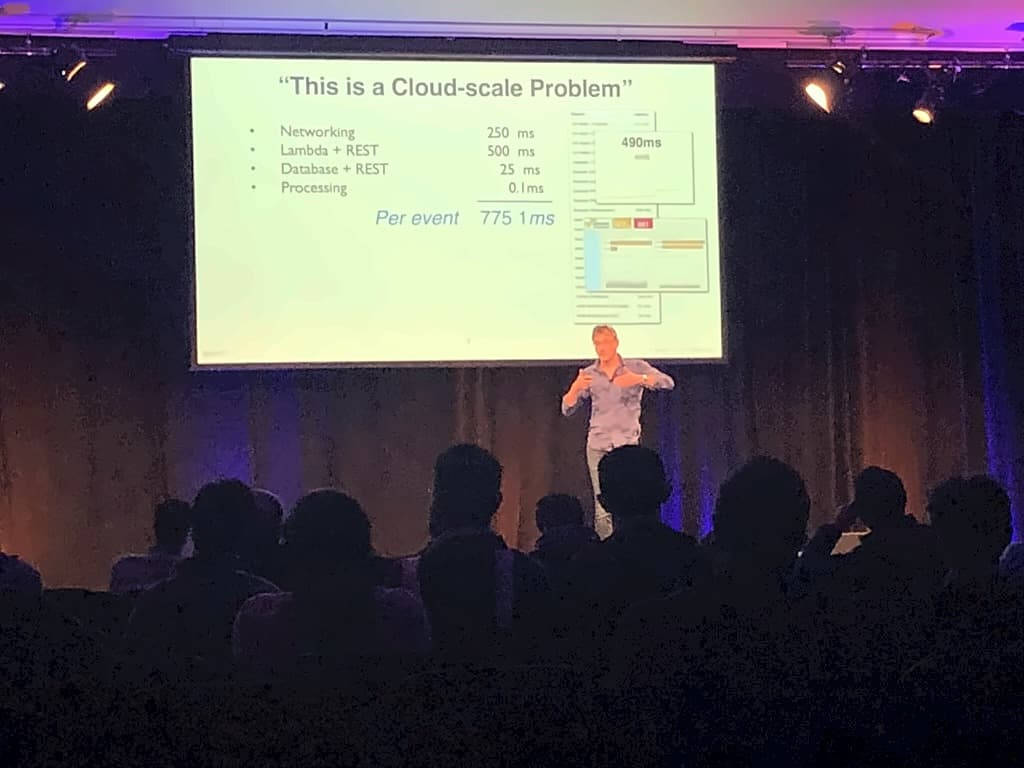
775 milliseconds per event, round trip. The whole argument for edge compute in one slide. 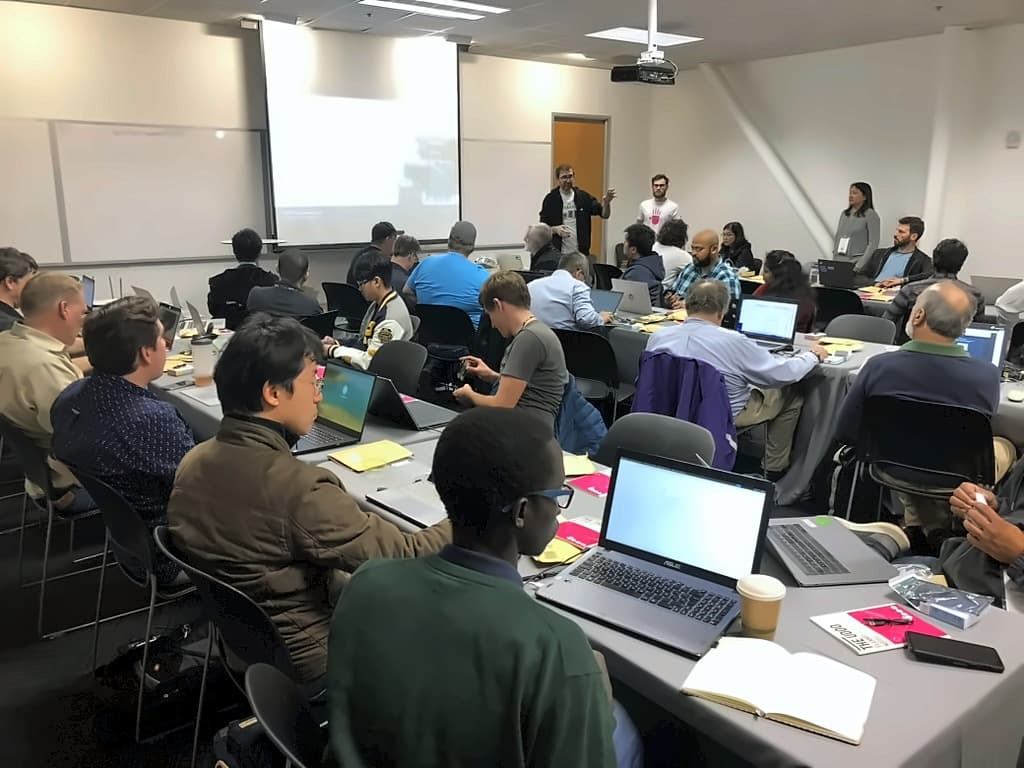
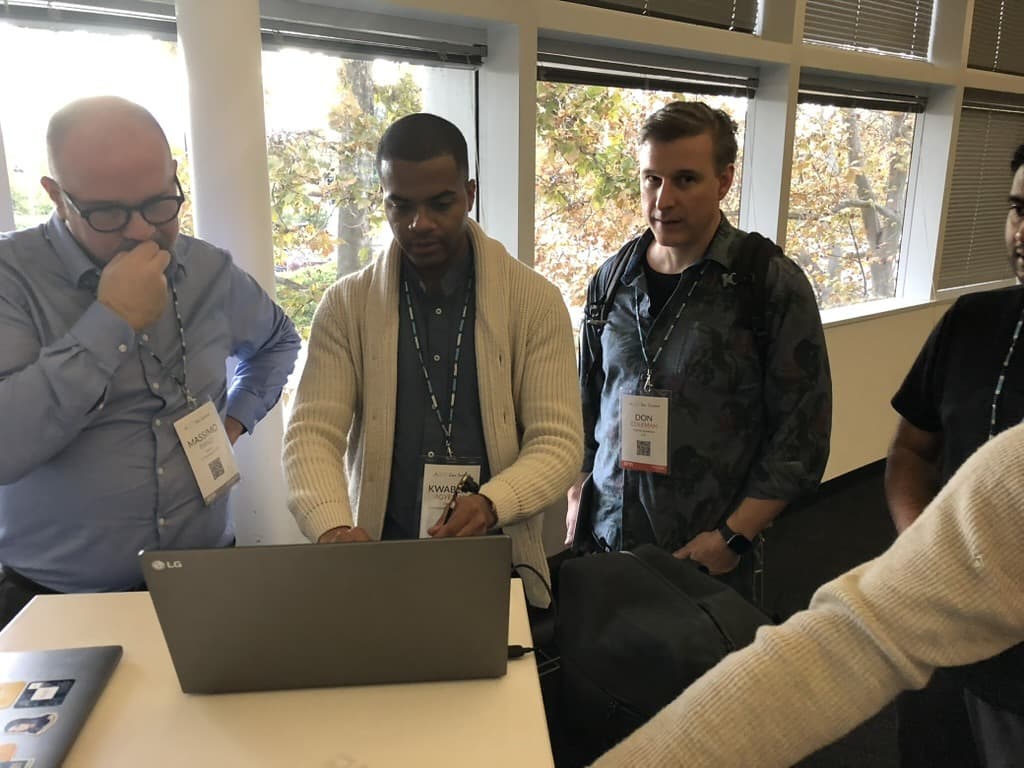
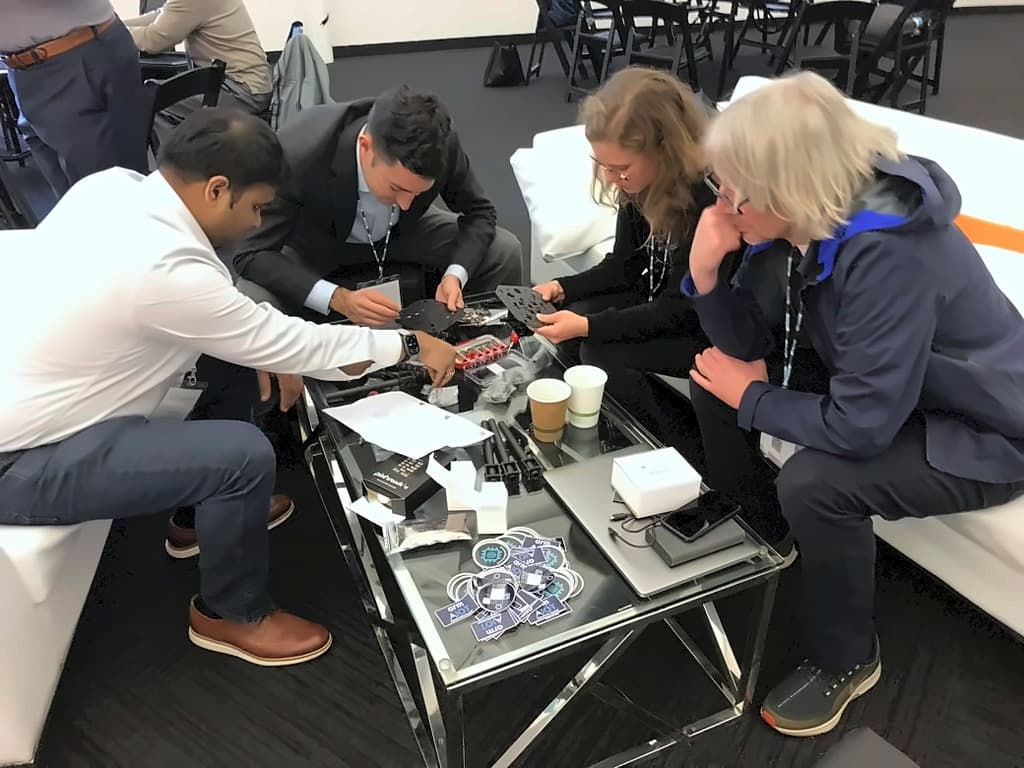
Hardware in the lounge. Nobody scheduled this one.